
Marketplace development brings together several parties around a transaction. The software has to support buyers, sellers or service providers, and the operator responsible for the platform. A catalogue and checkout can be only part of that arrangement.
Define what the marketplace facilitates before choosing technology. A directory that introduces businesses, a service-booking platform and a shop taking payment for several sellers have different responsibilities. Their scopes should not be priced as if they were interchangeable.
Choose the transaction model first
Write what is exchanged, who promises to deliver it, when an order becomes binding within the agreed commercial process and how the operator earns revenue. Identify whether the platform introduces parties, records a booking or participates in payment collection. Have the relevant commercial and professional reviewers resolve contractual and regulated responsibilities.
For a hypothetical marketplace for equipment hire, decide whether the operator confirms availability or each supplier does. That choice affects the customer promise, payment sequence and support queue. A feature called “booking” cannot settle those questions.
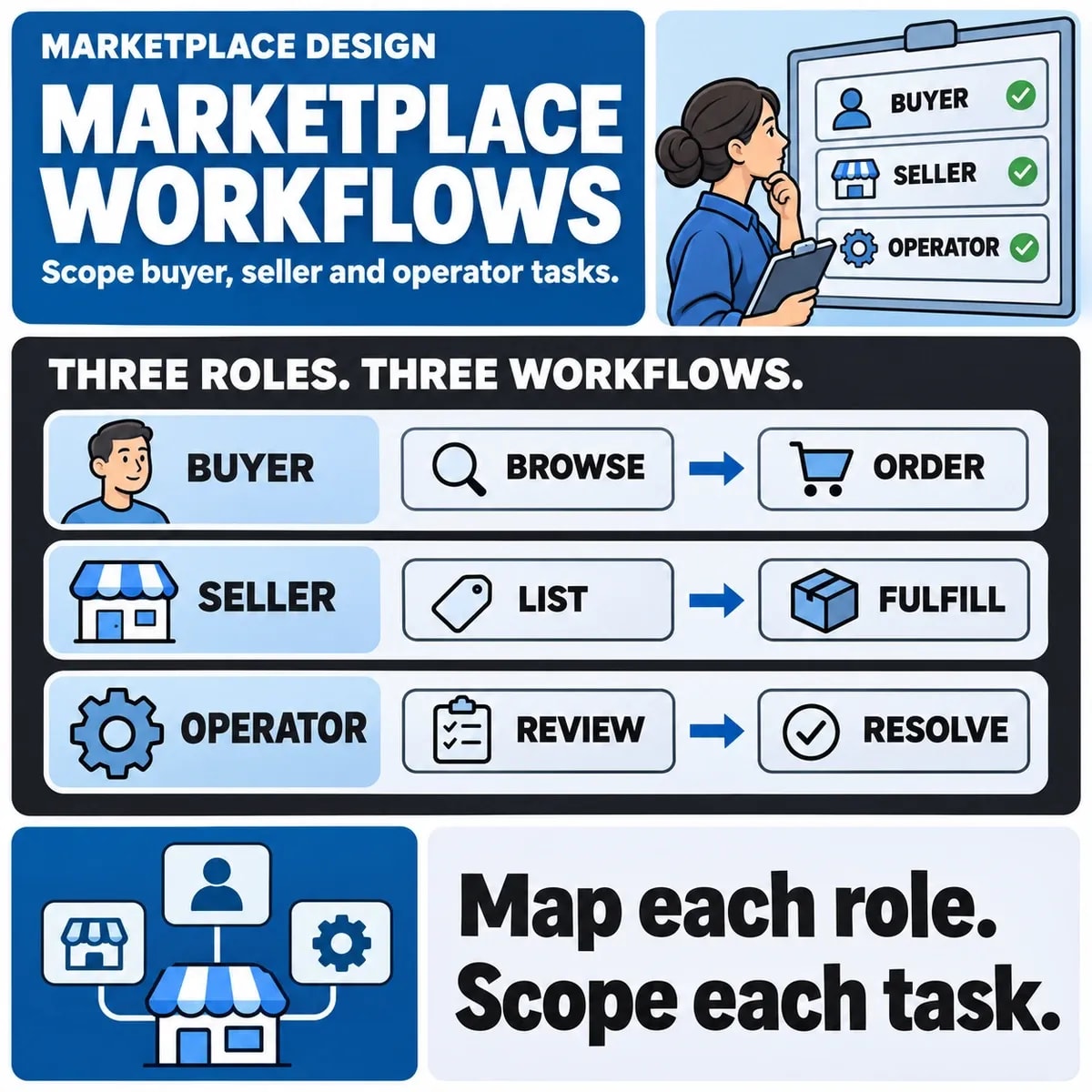
Map all three sides of a transaction
| Participant | Required outcome | Exception to define |
|---|---|---|
| Buyer | Find suitable equipment and understand availability | Supplier rejects a requested period |
| Supplier | Publish accurate listings and fulfil accepted hire | Equipment becomes unavailable after acceptance |
| Operator | Resolve disputed status and manage platform rules | Payment, cancellation and fulfilment records disagree |
Walk through discovery, request, confirmation, fulfilment, completion and any refund. At every transition, name the person or system authorised to act and the evidence recorded. Operator tools deserve explicit scope; they are not merely a hidden administration screen.
Define listings and supplier onboarding
Specify the minimum information needed to make a listing useful: description, location or service area, availability basis, pricing basis and fulfilment conditions. Decide which details are verified, who performs that check and what the interface can honestly claim.
Include draft, approved, suspended and retired listing behaviour where the operating process needs it. Determine what happens to existing transactions when a supplier is suspended. Do not silently delete the evidence customers and support staff need to resolve an open matter.
Plan payments as a separate integration decision
Marketplace payment design can involve several accounts and money movements. Stripe Connect's documentation describes platform and marketplace payment capabilities. It is an example of a provider model to investigate, not evidence that every proposed business, country or payment flow is supported.
Draw who receives the customer payment, how the platform fee is represented, how a seller receives funds and what happens after a partial refund or dispute. Validate the intended arrangement with the payment provider and appropriate specialist reviewers before implementation. Do not treat a split-payment demo as proof of the whole commercial model.
Give cancellation and reconciliation an owner
For the equipment example, a buyer might cancel one item in a multi-supplier request. Decide whether that changes other items, operator fees or the remaining delivery promise. Show the buyer and each supplier only the records they are entitled to see.
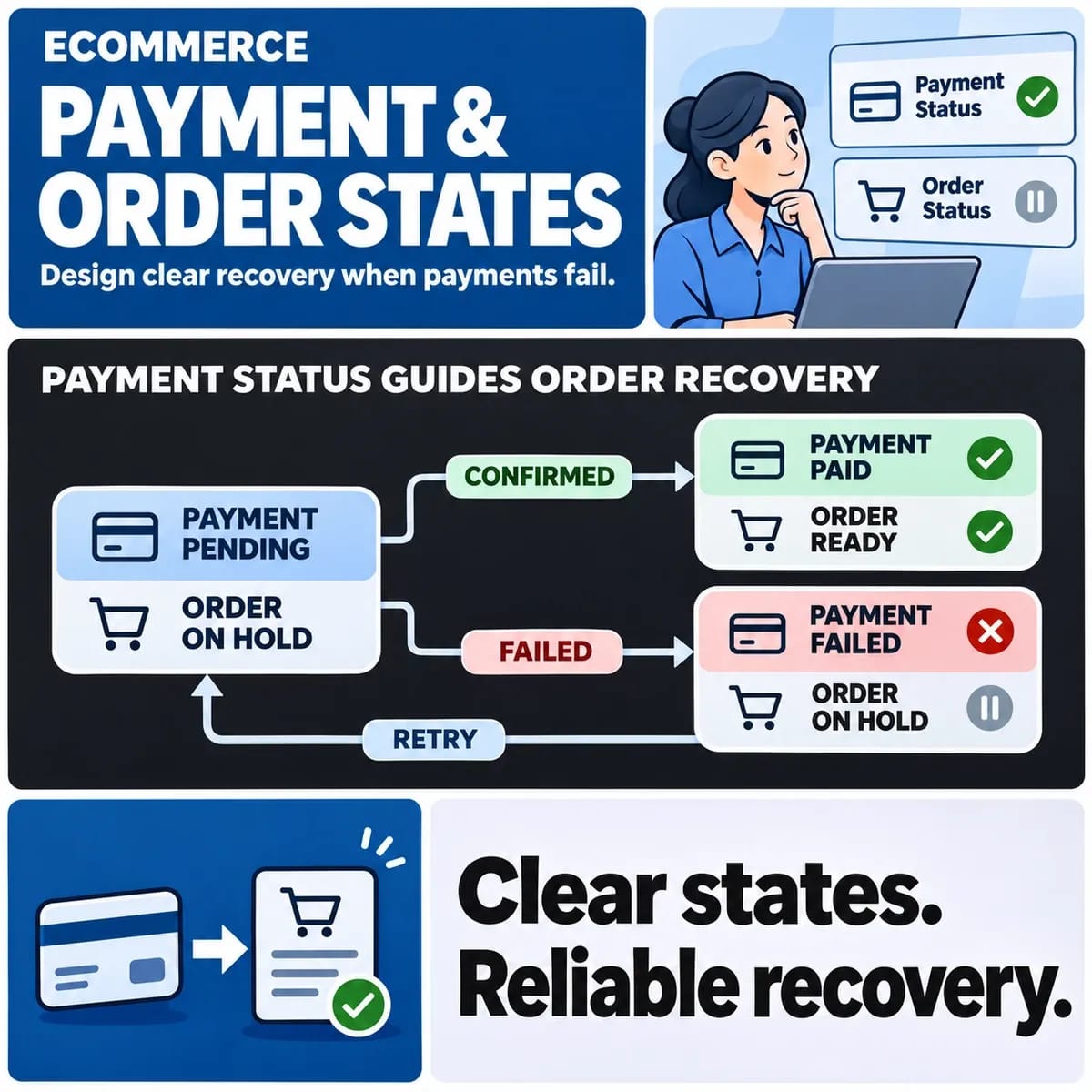
Keep transaction identifiers linking the marketplace, payment provider and supplier records. Define a reconciliation process for differences between payment status and business status. The operator needs to identify an unresolved transaction without editing data blindly to make a dashboard look consistent.
Scope a first release around one useful exchange
Constrain participant type, geography, listing model and transaction complexity where appropriate. A first release could support invited suppliers, one hire category and operator-reviewed requests. That is a business choice to validate, not a recommendation to bypass necessary checks.
State what remains manual: supplier vetting, listing approval, dispute handling or availability confirmation. Estimate the staff effort and provide the information those people need. Manual operations can be a deliberate early design; undocumented operations make costs and customer promises difficult to control.
Estimate workflows and operational tools
Separate buyer experience, supplier onboarding, listing management, transaction states, operator tools, payments, notifications, reporting and assurance. Add integrations and data migration only against verified requirements. Include testing across participants rather than counting each screen once.
Ask suppliers to identify assumptions that change effort. Multi-seller baskets, variable commissions, recurring transactions and several fulfilment models create different problems. No single marketplace development price can represent all those scopes, and a generic ecommerce estimate does not establish the extra operational work.
Test the exceptions before opening access
- Two customers request the last available item or overlapping hire periods.
- A supplier changes a listing while a transaction is awaiting confirmation.
- A payment succeeds but the marketplace update is delayed.
- A refund affects only one part of a multi-party transaction.
- A support agent needs to investigate without crossing participant access boundaries.
Agree expected outcomes and responsible operators for these cases. Measure useful completed exchanges, unfulfilled demand, unresolved exceptions and support effort after an approved launch. Account registrations alone do not establish that the marketplace is working for either side.
Prepare a marketplace development brief
Bring the participant map, transaction model, manual-operation plan and payment questions to an ecommerce development discussion. Describe the intended operating model before requesting an architecture or a fixed commercial proposal.
The ecommerce development cost guide covers conventional store budgeting. Keep the marketplace's multi-party and operator requirements separately visible so a familiar catalogue does not conceal the more difficult parts of the system.