
Custom Enterprise Software
We design custom enterprise software around your operational workflows, users and data. Each platform is structured for security, maintainability, integration and long-term organisational growth.
Learn More


Build secure, scalable enterprise software that connects teams, data and business processes across your organisation. ZakCodeX provides end-to-end software development services for enterprise web applications, mobile platforms, ERP systems, CRM solutions, employee portals and operational software. We combine stakeholder workshops, business analysis, workflow mapping, solution architecture, database design, development, integration, testing and deployment. Our engineers also modernise legacy systems, consolidate fragmented data and introduce automation, analytics and AI capabilities without compromising maintainability, performance, security or regulatory requirements.
Hire Enterprise Software Development Company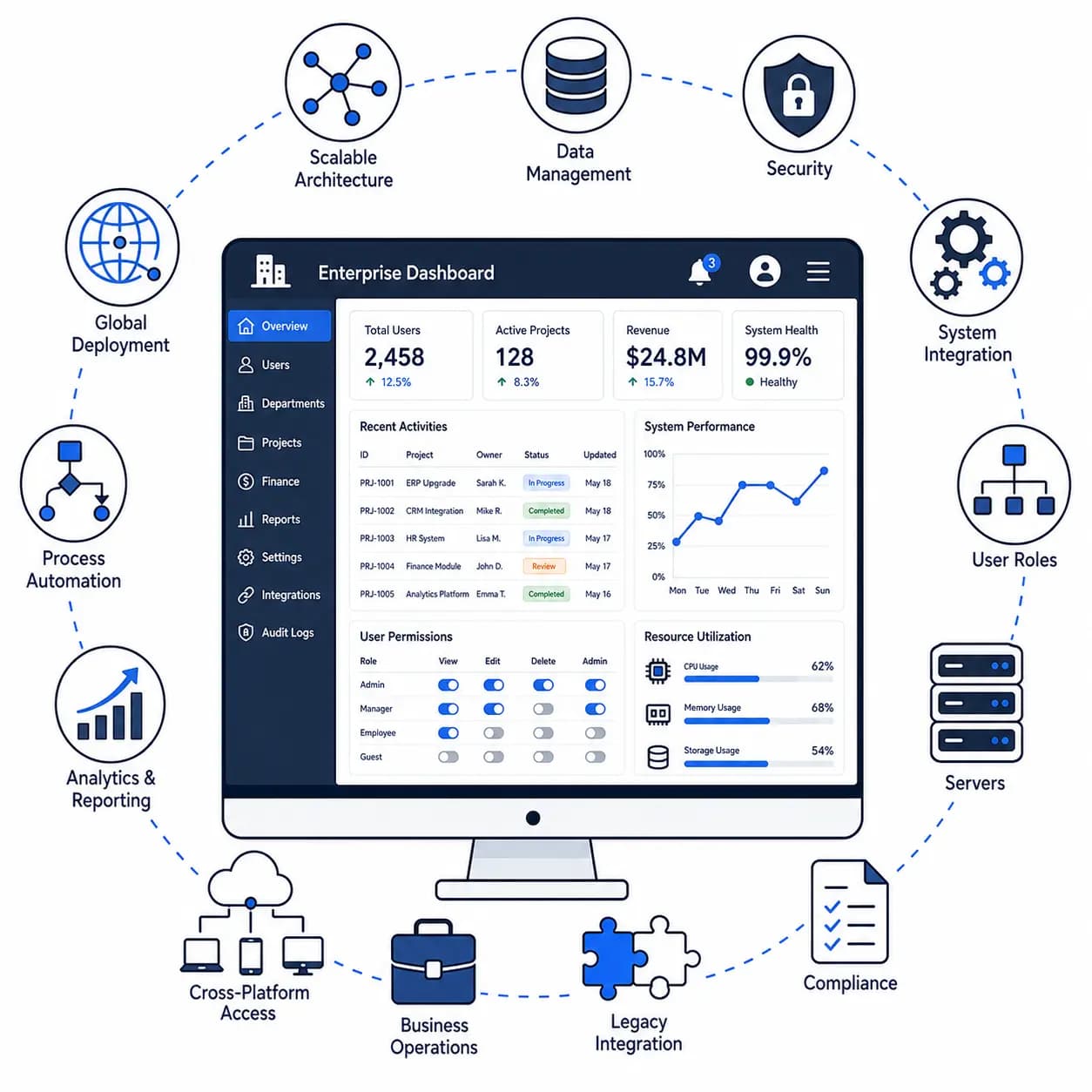
Enterprise software development helps organisations replace disconnected tools, spreadsheets and ageing systems with centralised applications designed around real operational requirements. A well-architected platform can automate approvals, improve process visibility, strengthen collaboration and provide reliable access to business data. ZakCodeX develops modular enterprise systems with secure access controls, scalable architecture and practical integrations. Our custom software development services support long-term digital transformation without forcing your organisation into unsuitable off-the-shelf workflows.
ZakCodeX delivers enterprise software development services for UK organisations replacing legacy tools, automating complex operations or creating new digital platforms. We support the complete lifecycle, from consulting and architecture to deployment and ongoing support.
Our enterprise software projects solve operational problems rather than adding another disconnected tool. We create platforms for centralised data management, workflow automation, reporting, customer service, finance, HR and multi-department operations. Explore how our teams apply business analysis, UX design, scalable architecture, secure integrations and disciplined engineering to deliver maintainable enterprise applications. Your organisation's next system could be our next successful collaboration.
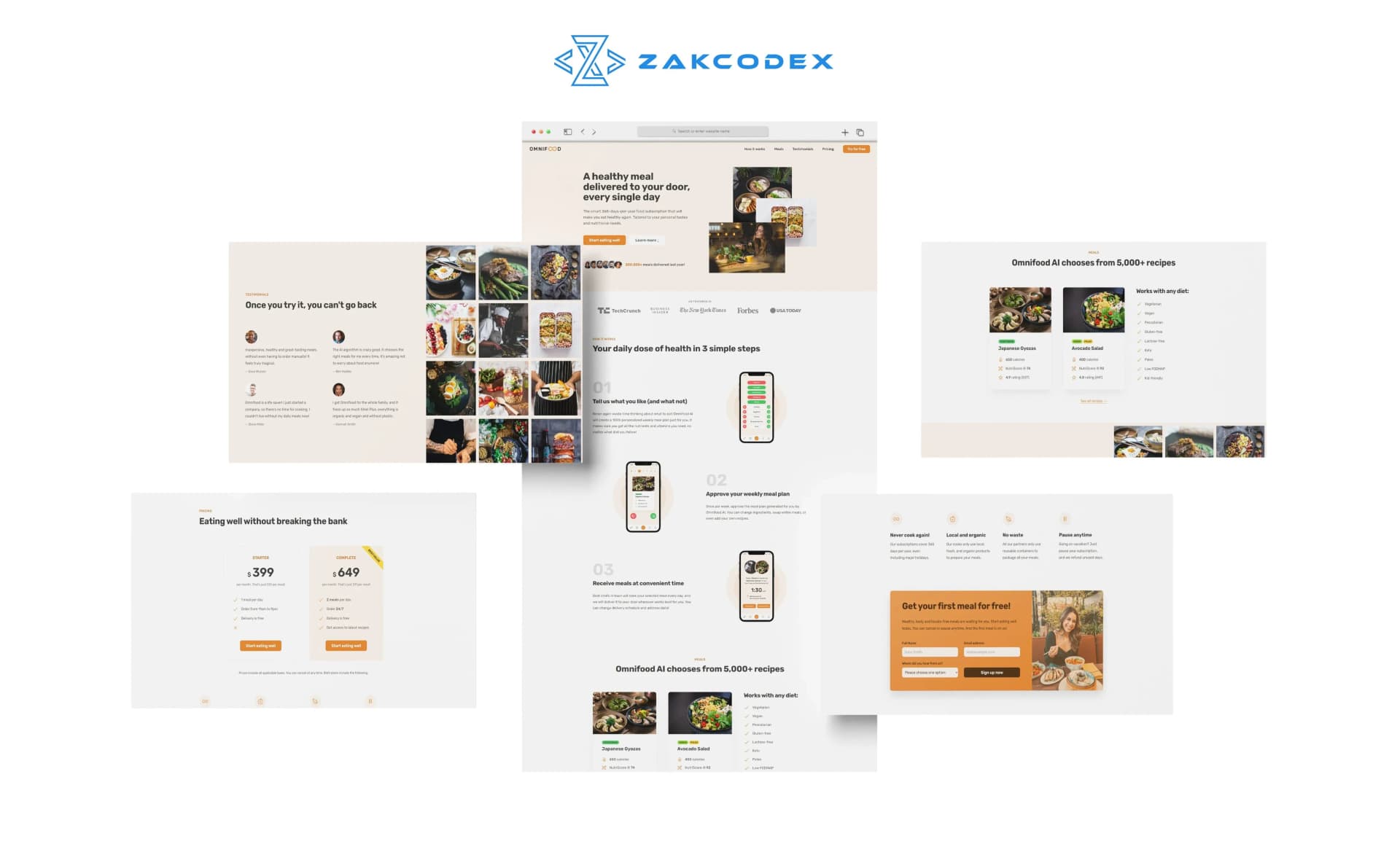
Delivered a responsive food subscription website for Omnifood, featuring personalized meal plans, pricing, testimonials, diet options, and a seamless signup experience.
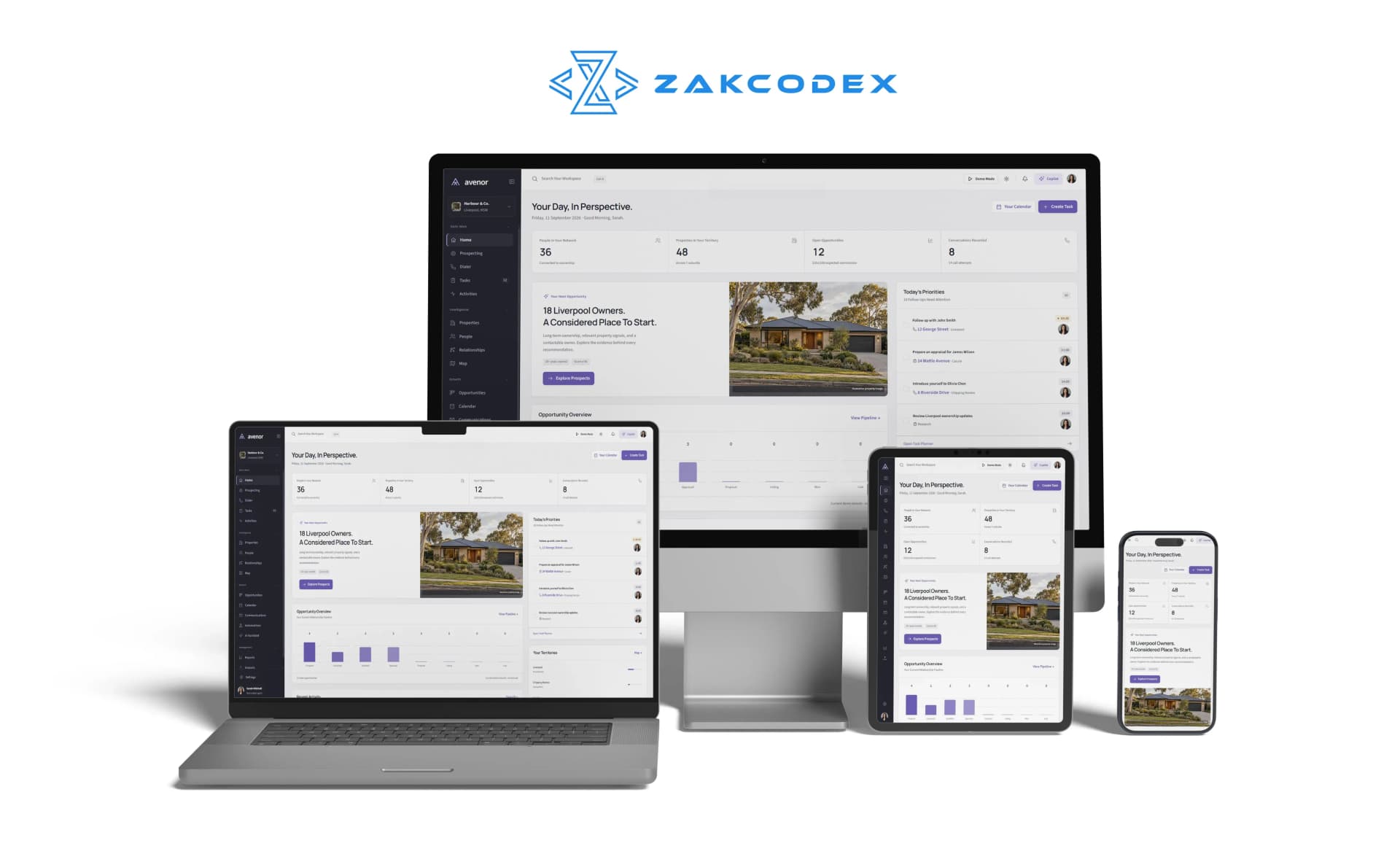
Delivered a real estate CRM and property intelligence SaaS with property data, people-property relationships, interactive maps, a power dialer, automation, and AI-driven insights.
Our enterprise software development process combines stakeholder alignment, detailed business analysis and disciplined engineering. Each stage reduces uncertainty, validates requirements and keeps architecture, security, user needs and delivery priorities connected.

We run stakeholder workshops to understand business objectives, operational challenges, user groups, regulatory needs and existing systems. We identify project risks, dependencies and success criteria before recommending a delivery approach.

Our analysts gather functional and non-functional requirements, map current and future workflows, define user roles and document integration needs. The resulting scope prioritises valuable capabilities and reduces ambiguity during delivery.

We define solution architecture, modules, data models, integration patterns, access controls and hosting environments. Decisions consider scalability, maintainability, performance, observability, high availability and future business change.

UX designers create practical interfaces for complex workflows while engineers build secure frontend, backend and database components. Iterative demonstrations keep stakeholders involved and ensure the application reflects real working practices.

Our <a href="/services/software-testing-services">Software Testing Services</a> cover functional testing, integration testing, security checks, performance validation and user acceptance testing. Defects and release risks are addressed before production deployment.

We prepare cloud environments, CI/CD pipelines, monitoring, backups and release procedures. Data migration, user permissions and integrations are verified before launch, with rollback planning to protect operational continuity.

After launch, we train administrators and users, monitor application health and resolve issues. Our <a href="/services/application-maintenance-support">application maintenance and support</a> covers updates, optimisation, security patches and ongoing feature development.
We select technologies according to system requirements rather than trends. Our enterprise stack includes Laravel, Node.js, Python, Django, FastAPI, React and Next.js, with PostgreSQL, MySQL, MongoDB and Redis. We deploy on AWS, Microsoft Azure and Google Cloud Platform using Docker, Kubernetes, Terraform, DevOps practices and CI/CD pipelines.
GitHub is the most widely used version control and collaboration platform for developers. It helps teams manage code, track changes, and work together efficiently, ensuring smooth project workflows.
Visual Studio Code is a lightweight yet powerful source code editor. With built-in debugging, extensions, and language support, it enables faster and more efficient development.
Jira is a project management tool tailored for agile software teams. It helps in planning, tracking, and managing projects, ensuring better collaboration and timely delivery across distributed teams and departments.
Docker is a leading containerization platform that makes applications portable and scalable. It simplifies development, testing, and deployment across multiple environments.
Jenkins is an automation server that supports continuous integration and delivery (CI/CD). It allows developers to automate builds, testing, and deployment pipelines.
Kubernetes is an orchestration platform for managing containerized applications. It automates deployment, scaling, and monitoring for enterprise-level applications.
Amazon Web Services (AWS) is a cloud computing platform offering infrastructure, storage, and deployment solutions. It ensures scalability, flexibility, and security for modern applications.
Postman is an API development and testing platform. It allows developers to design, test, and monitor APIs, making integration and collaboration much easier globally.
Selenium is a widely used automation framework for testing web applications. It ensures cross-browser compatibility and improves overall software quality consistently.
SonarQube is a tool for continuous code quality and security checks. It analyzes code for bugs, vulnerabilities, and ensures clean, maintainable software.
Slack is a team communication platform that simplifies collaboration. It integrates with development tools, enabling instant messaging, file sharing, and streamlined workflows.
Bitbucket is a Git-based code hosting platform designed for teams. It provides version control, collaboration features, and seamless integration with CI/CD pipelines.
ZakCodeX combines software engineering with business analysis, workflow design and systems integration expertise. We examine how people, processes, data and technology interact before writing production code. This approach supports enterprise applications that remain usable, secure and maintainable as requirements evolve. From Cloud Application Development to legacy replacement, we prioritise clear architecture, controlled delivery, transparent communication and dependable long-term support.
We translate operational requirements into practical system architecture. Modules, workflows, integrations and data structures are planned around measurable business needs rather than unnecessary technical complexity.
Applications can include RBAC, SSO, multi-factor authentication, encryption, audit logs and secure secrets management. We also consider backup, disaster recovery, compliance and business continuity requirements.
We design modular monoliths, microservices or hybrid architectures based on genuine scale and maintenance needs. Load balancing, caching and database optimisation support reliable performance as usage grows.
Our API Development Services connect internal modules and external platforms through secure, documented interfaces, resilient data flows and controlled authentication mechanisms.
Engage ZakCodeX for full-cycle delivery, phased modernisation, technical consulting or an integrated engineering team. Delivery models are aligned with your governance, priorities, budget and internal capabilities.
We remain available after deployment for monitoring, technical support, security updates, performance optimisation and feature development, helping your enterprise platform adapt as operations and requirements change.
Our clients value software that reflects how their organisations actually work. We collaborate with stakeholders, technical teams and end users to clarify requirements, reduce delivery risk and create dependable systems. Their feedback highlights our communication, engineering discipline and commitment to building secure, maintainable enterprise applications that support complex operations and continued digital transformation.
ZakCodeX replaced several disconnected operational tools with one structured enterprise platform. Their team took time to understand our approval processes, reporting requirements and user roles, then delivered a secure system that is far easier for our departments to manage.

Operations Director, Northbridge
The project involved legacy data, third-party integrations and complex permissions. ZakCodeX handled each area methodically, communicated technical decisions clearly and delivered a stable application our internal team can maintain and extend.

Product Lead, Vertex Systems
ZakCodeX helped us modernise a critical business system without disrupting daily operations. The new platform gives our teams clearer workflows, better reporting and secure access to the information they need.

Managing Director, Oakwell Group
Explore recent ZakCodeX articles related to enterprise software development. These posts cover strategy, implementation, and best practices to help you plan projects with clearer expectations and stronger business outcomes.


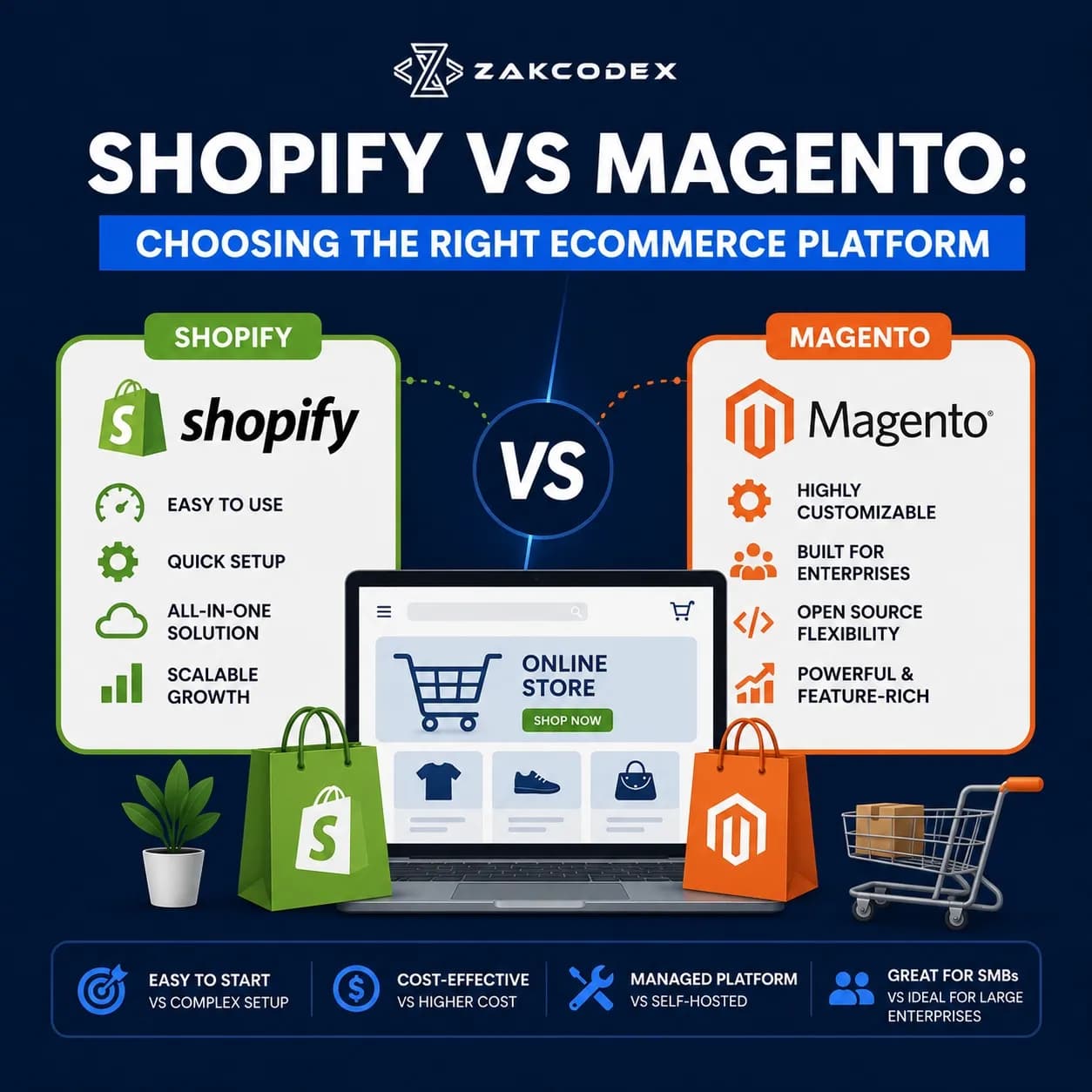
Explore common questions about enterprise software development, architecture, integrations, security, modernisation, costs and delivery. Our answers explain the practical considerations UK organisations should assess before starting a project.