
QA Strategy and Test Planning
We analyse requirements, architecture, user journeys and technical risks to create a practical test strategy, coverage model, test plan, traceability approach and evidence-based release criteria.
Learn More


Release dependable software with structured quality assurance, practical risk analysis and testing aligned with your users, systems and commercial priorities. ZakCodeX provides Software Testing Services for UK startups, SaaS companies, established businesses and enterprise organisations. We test web applications, mobile apps, APIs, cloud platforms, CRM systems, ERP software, ecommerce stores and internal tools through manual testing, test automation, integration checks, performance analysis and security validation. Our QA engineers identify defects earlier, document release risks clearly and help your team maintain reliable software across new products, modernisation projects, migrations, upgrades and frequent feature releases.
Hire a Software Testing Company in UK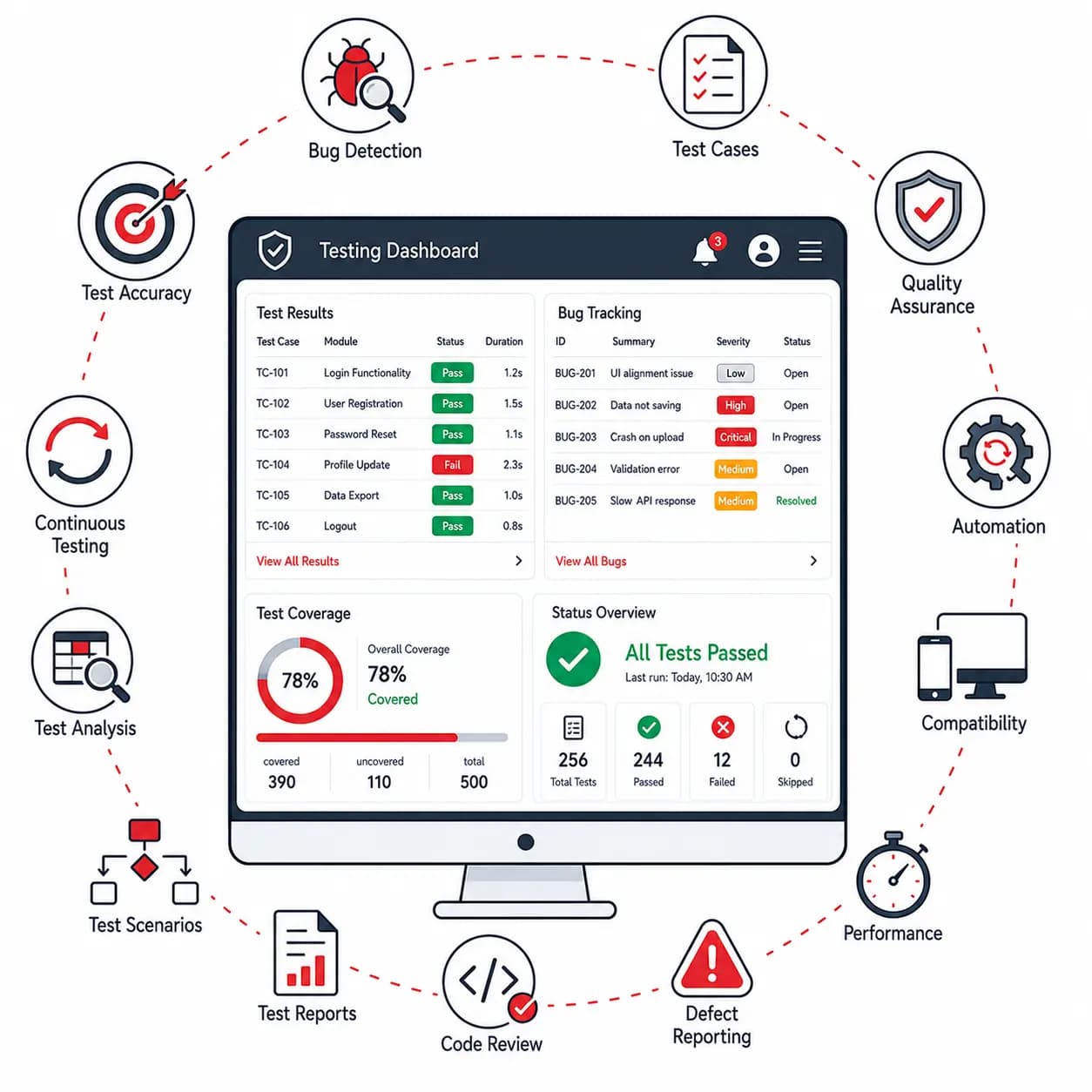
Professional software testing helps organisations understand whether a product behaves correctly, protects data, supports real users and remains stable under expected demand. Quality assurance improves the processes used to prevent defects, while quality control and software testing evaluate actual outputs. Quality engineering extends these practices across architecture, development and delivery. Our software development services combine engineering and QA disciplines so defects, usability concerns, integration failures and release risks can be addressed before they disrupt customers or business operations.
ZakCodeX provides independent QA, embedded testing specialists and dedicated teams for digital products at every stage. We support new builds, SaaS MVPs, legacy modernisation and ongoing releases with practical manual and automated testing.
Our QA and testing services support healthcare systems, property platforms, ecommerce stores, finance products, legal software, education portals, manufacturing tools, logistics platforms, retail systems and recruitment applications. We also test SaaS products, booking systems, marketplaces, CRM and ERP platforms, customer support tools, sales applications and internal business software. Explore our portfolio to see how structured testing, clear defect reporting and risk-based release validation contribute to reliable digital products.
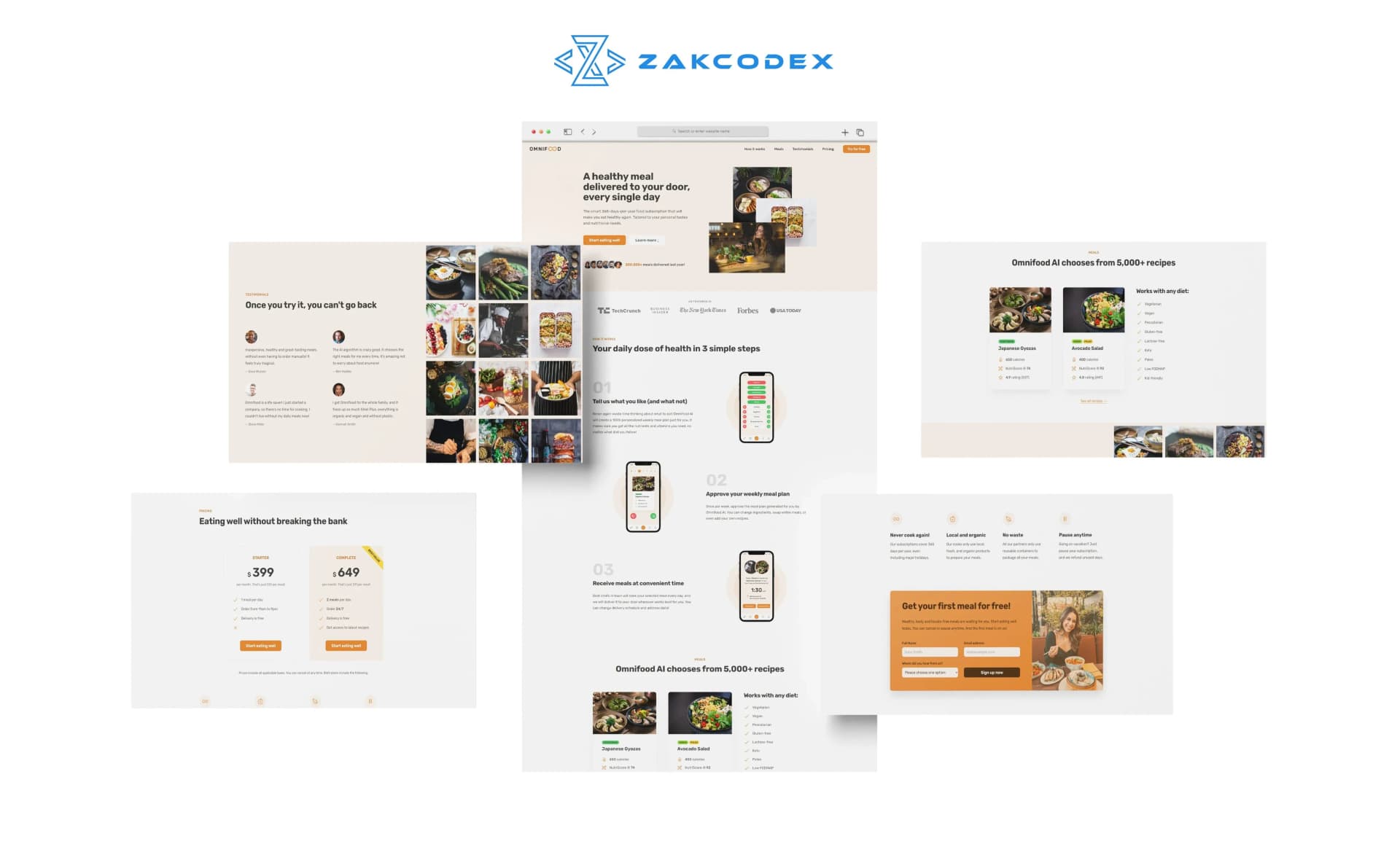
Delivered a responsive food subscription website for Omnifood, featuring personalized meal plans, pricing, testimonials, diet options, and a seamless signup experience.
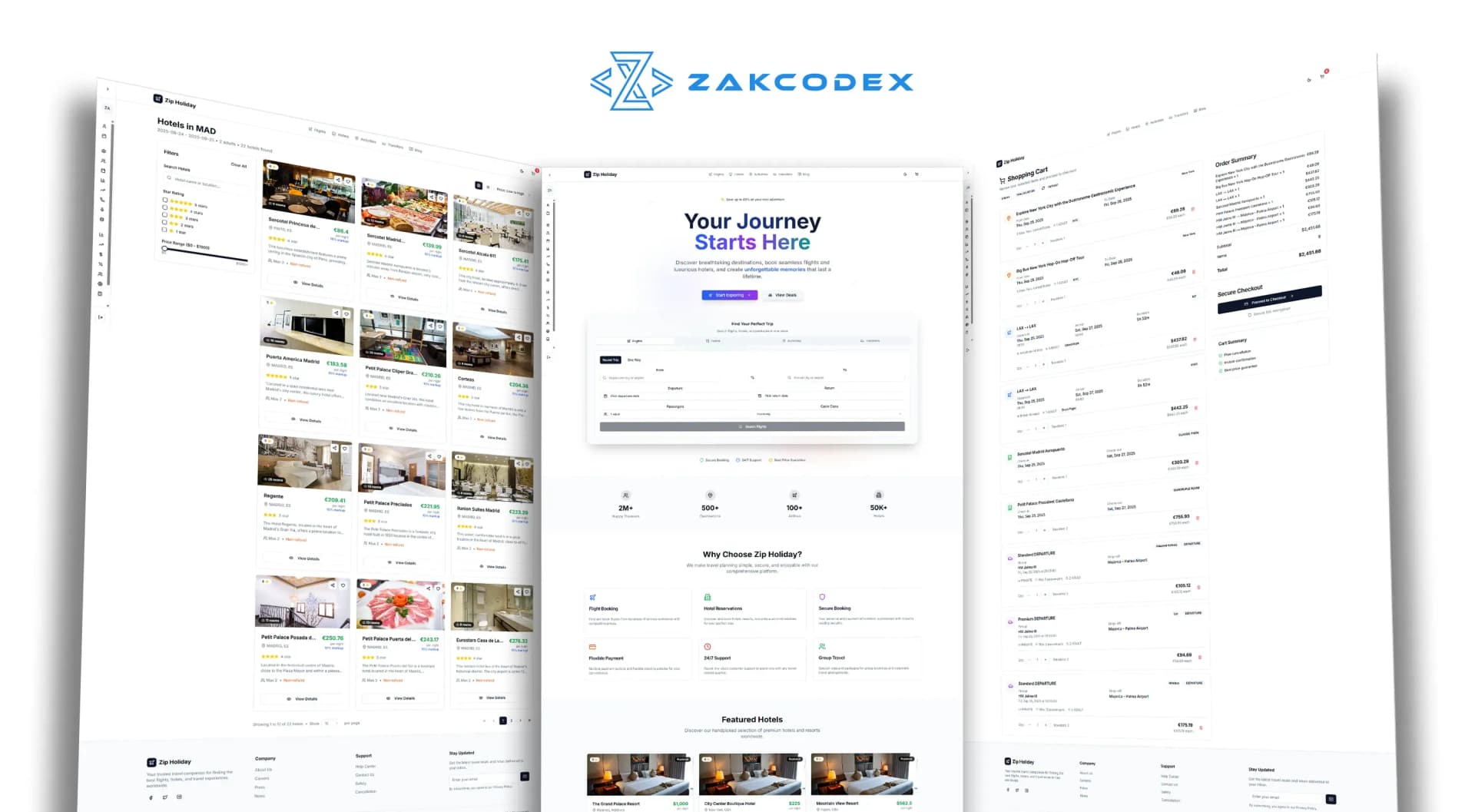
Delivered a Next.js website Zip Holiday with Duffel and HotelBeds API integration to support hotel, flight, activity, and transfer bookings. The backend is powered by AWS Lambda serverless functions for scalability and efficiency.
Our testing process connects business requirements, technical risk and user expectations. Whether we join an existing delivery team or manage an independent QA engagement, every stage produces visible evidence, prioritised findings and practical release recommendations.

We review the product, architecture, requirements, user journeys, previous defects and release objectives. Our team identifies quality risks, unclear acceptance criteria, critical integrations and the environments required for effective testing.

We assess feature impact, technical complexity, data sensitivity and operational importance. Risk-based testing helps prioritise high-value workflows, security controls, integration points and failure scenarios within the available delivery schedule.

We define the test scope, testing levels, environments, responsibilities, entry criteria and release conditions. Plans may include manual testing, automation, performance checks, security validation and user acceptance testing activities.

Our QA engineers create test cases, exploratory charters, test data and reusable scripts mapped to requirements. We cover expected behaviour, negative scenarios, boundaries, permissions, integrations and commercially critical user journeys.

We execute manual and automated tests in controlled environments, record evidence and compare actual outcomes with expected behaviour. Smoke, functional, integration, system and regression checks provide progressive quality feedback.

Defects are documented with severity, priority, reproducible steps, evidence and affected environments. We collaborate with developers on triage, root cause analysis, retesting and regression coverage using Jira, TestRail or existing tools.

Before release, we verify resolved defects, critical workflows, integrations and deployment configurations. Stakeholders receive test summaries, known risks, coverage details and a clear recommendation supporting informed release decisions.
Our technology selection reflects the product, architecture and delivery workflow rather than a fixed toolset. We use Selenium, Cypress, Playwright, Appium, Postman, JMeter, K6, Jest, Pytest and Cucumber alongside BrowserStack, Sauce Labs, SonarQube, Jira and TestRail. Automated checks can run through Jenkins, GitHub Actions or GitLab CI in Docker-based environments hosted on AWS, Microsoft Azure or Google Cloud Platform.
GitHub is the most widely used version control and collaboration platform for developers. It helps teams manage code, track changes, and work together efficiently, ensuring smooth project workflows.
Visual Studio Code is a lightweight yet powerful source code editor. With built-in debugging, extensions, and language support, it enables faster and more efficient development.
Jira is a project management tool tailored for agile software teams. It helps in planning, tracking, and managing projects, ensuring better collaboration and timely delivery across distributed teams and departments.
Docker is a leading containerization platform that makes applications portable and scalable. It simplifies development, testing, and deployment across multiple environments.
Jenkins is an automation server that supports continuous integration and delivery (CI/CD). It allows developers to automate builds, testing, and deployment pipelines.
Kubernetes is an orchestration platform for managing containerized applications. It automates deployment, scaling, and monitoring for enterprise-level applications.
Amazon Web Services (AWS) is a cloud computing platform offering infrastructure, storage, and deployment solutions. It ensures scalability, flexibility, and security for modern applications.
Postman is an API development and testing platform. It allows developers to design, test, and monitor APIs, making integration and collaboration much easier globally.
Selenium is a widely used automation framework for testing web applications. It ensures cross-browser compatibility and improves overall software quality consistently.
SonarQube is a tool for continuous code quality and security checks. It analyzes code for bugs, vulnerabilities, and ensures clean, maintainable software.
Slack is a team communication platform that simplifies collaboration. It integrates with development tools, enabling instant messaging, file sharing, and streamlined workflows.
Bitbucket is a Git-based code hosting platform designed for teams. It provides version control, collaboration features, and seamless integration with CI/CD pipelines.
ZakCodeX combines practical software quality assurance with an understanding of product architecture, business workflows and modern delivery practices. Our testers can work independently, embed within Agile teams or support a wider custom software development engagement. We communicate findings clearly, prioritise defects by impact and create documentation that helps technical and non-technical stakeholders understand test coverage, unresolved risks and release readiness.
We prioritise workflows that affect customers, revenue, data and daily operations. This keeps testing aligned with genuine business risk rather than producing large volumes of low-value test cases.
Our approach combines human exploration with repeatable automation. This provides broader behavioural insight while protecting stable features through maintainable regression suites.
Choose independent QA, embedded engineers, a dedicated testing team or project-based delivery. We adapt responsibilities, communication and reporting to your internal workflow.
Every reported issue includes context, environment details, reproducible steps, evidence, severity and priority, helping developers investigate efficiently and stakeholders assess impact.
We integrate automated checks into Jenkins, GitHub Actions and GitLab CI pipelines, helping teams identify regressions earlier and support more frequent, controlled software releases.
Our team supports maintenance testing, version upgrades, compatibility checks and regression testing as your product changes, integrations evolve and operating environments are updated.
Our clients rely on ZakCodeX to bring structure, visibility and independent judgement to software quality. From early-stage SaaS products to established business applications, we help teams understand defects, prioritise release risks and improve regression coverage. These experiences reflect our focus on transparent communication, practical documentation and testing decisions grounded in how the software is actually used.
ZakCodeX introduced a clear QA process for our SaaS platform and found several subscription, permission and reporting issues before release. Their defect reports were precise, easy to reproduce and genuinely useful to our developers and product team.

Product Director, CloudDesk UK
Their testers covered our web portal, CRM integrations and mobile workflows across multiple devices. Communication was consistent, risks were explained clearly, and the final release report gave us confidence to deploy.

Operations Lead, HomeKey Systems
The automated regression suite ZakCodeX created now runs with our CI pipeline and catches problems much earlier. The team balanced automation with thoughtful exploratory testing instead of simply scripting every screen.

CTO, MarketFlow Technologies
Explore recent ZakCodeX articles related to software testing services. These posts cover strategy, implementation, and best practices to help you plan projects with clearer expectations and stronger business outcomes.


Learn how our Software Testing Services, QA consulting and test automation engagements are planned, delivered and adapted to different products. Each answer explains the practical considerations behind coverage, tools, documentation and release decisions.