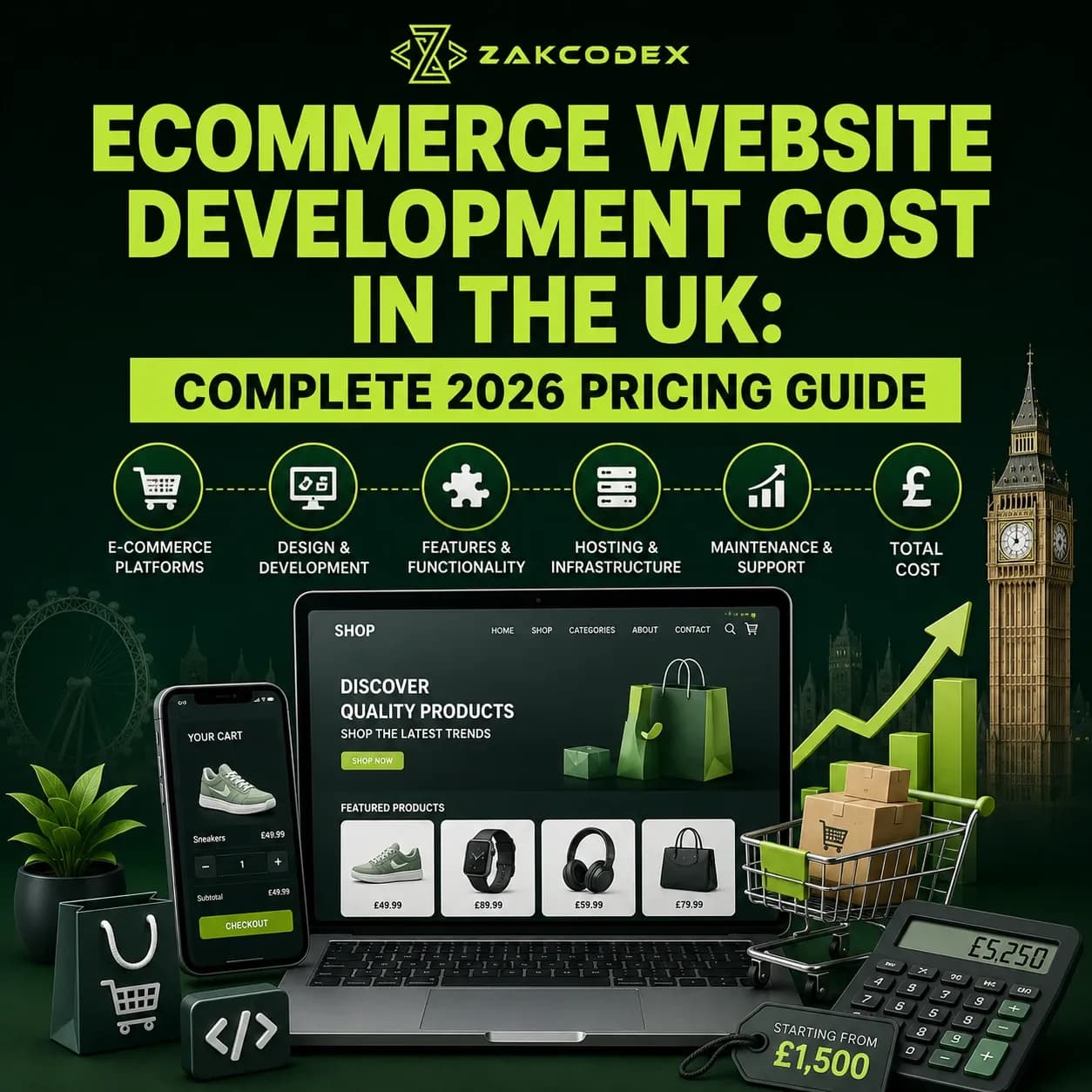
In the United Kingdom, the upfront ecommerce website development cost typically ranges from £1,500 for a straightforward template-based storefront to well over £150,000 for a multi-enterprise headless system, with a standard custom retail build falling between £10,000 and £45,000. Final project pricing is determined entirely by custom business requirements, including product catalog complexity, multi-currency processing layers, back-office inventory synchronisation, and localized checkout mechanics. Relying on generic assumptions without analyzing payment transaction fee brackets, custom middleware modules, and ongoing application extensions frequently leads to structural project failure and severe budget overruns.
As British retail commerce rapidly adapts to lightning-fast mobile performance frameworks, predictive product personalization systems, and Omni-channel architectures, managing your digital engineering capital demands extreme financial clarity. Selecting a mismatched technology platform or underestimating integration dependencies can saddle technical leaders with heavy operational tech debt and high refactoring overhead. This comprehensive strategic roadmap breaks down the actual ecommerce website development cost uk parameters to help you secure an optimal return on investment.
What Is Ecommerce Website Development?
In modern corporate environments, ecommerce website development refers to the end-to-end software engineering lifecycle required to design, program, configure, and launch a secure transactional web application. Far beyond simple website assembly, professional web construction involves building resilient database relationships, mapping secure checkout logic, implementing high-speed search engines, and configuring automated inventory pipelines that communicate seamlessly with global fulfillment services.
Modern retail engineering blends strict front-end performance principles with standard multi-tier data architectures. This ensures your online store does not operate as an isolated digital brochure, but functions as a tightly integrated module within your operational stock models, customer relationship layers, and logistics networks. When executed correctly through professional ecommerce web development services, it allows retail brands to scale their transactions fluidly while protecting customer data privacy.
Ecommerce Website Development Cost in the UK
When asking how much does it cost to develop an ecommerce website in the UK market, business leaders must evaluate the core structure of the build. Initial software production labor, baseline technology hosting fees, and variable payment gateway commissions all influence the total capital outlay. In 2026, the cost landscape is heavily influenced by the emergence of composite architectures that require cleaner data isolation layers, making precise architectural scoping vital.
Determining your exact cost for ecommerce website development requires analyzing the functional complexity tier of your brand storefront. A basic build using standard configurations remains relatively accessible, whereas an established mid-market merchant moving away from legacy software demands extensive discovery phases, custom database mapping, and specialized testing protocols.
| Complexity Tier | Technical Characteristics & Core Scope | UK Pricing Range (GBP) |
|---|---|---|
| Basic / Startup Store | Standard template customization, native payment integration, fewer than 500 SKUs, standard native marketplace apps. | £1,500 – £5,000 |
| Custom Brand Store | Bespoke frontend UI design, custom product attribute matrices, multi-warehouse shipping setups, complete third-party integrations. | £10,000 – £35,000 |
| Mid-Tier Enterprise | Bespoke system middleware, localized multi-market catalog translation, automated custom loyalty engines, robust B2B matrices. | £35,000 – £75,000 |
| Advanced Enterprise | Decoupled headless frontends, real-time microservices loops, global multi-vendor structures, elite data auditing layers. | £75,000 – £150,000+ |
Ecommerce Website Cost by Project Type
The total capital required to bring a transactional site to market follows distinct variations depending on the targeted software environment and architectural blueprint selected. The choice between an open-source framework, a managed SaaS framework, or a fully custom standalone build dictates your upfront engineering speed and long-term maintenance overhead.
Shopify Ecommerce Development Cost
A standard mid-market shopify ecommerce development project generally costs between £8,000 and £30,000 for custom-tailored store builds. This architecture path utilizes Liquid theme engineering to deliver pristine visual layers without sacrificing operational backend stability. For high-volume enterprise brands requiring custom checkout scripting, multi-store global routing, and advanced workflow logic, the investment transitions into dedicated enterprise channels, as detailed comprehensively in our guide to shopify development cost uk.
WooCommerce Development Cost
A typical woocommerce development cost roadmap ranges from £4,000 to £25,000. Operating as a flexible plugin on top of the WordPress ecosystem, this approach represents the core component of traditional wordpress ecommerce website development cost planning. While WooCommerce provides exceptional flexibility and requires no platform subscription licenses, it demands highly disciplined plugin engineering, advanced database structural tuning, and premium cloud hosting environments to guarantee robust checkout processing speeds during peak traffic events.
Custom Ecommerce Website Development Cost
For brands whose business logic scales completely outside standard platform settings, a custom ecommerce website development cost averages £35,000 to £90,000+. This deployment path focuses entirely on building bespoke database relationships, custom inventory routing matrices, and specialized user management portals from scratch. By using modern framework pillars, it provides infinite flexibility and removes platform restrictions completely, ensuring maximum operational performance over a multi-year lifecycle.
Headless Ecommerce Development Cost
A modern headless ecommerce development cost starts at £50,000 and can easily scale past £150,000 for complex multi-market applications. This elite architecture completely decouples your public front-end visual presentation layer (engineered via ultra-fast frameworks like Next.js or Nuxt) from your backend transactional checkout services. This structural isolation guarantees lightning-fast user interaction speeds, perfect mobile performance scores, and the infinite ability to transmit product catalogs securely to smart devices, retail screens, and native mobile apps simultaneously.
B2B Ecommerce Website Cost
A professional b2b ecommerce website development cost typically ranges from £25,000 to £80,000+. Business-to-business applications require far more complex backend logic than standard consumer shops. The engineering budget covers the production of dynamic wholesale pricing matrices, secure individual customer credit accounts, flexible multi-tier company team access settings, automated bulk ordering forms, and deep custom integrations with corporate ERP systems.
Multi-Vendor Marketplace Development Cost
Engineering a comprehensive multi-vendor ecommerce website development cost blueprint typically requires an investment of £40,000 to £120,000+. Similar to platforms like Amazon or Etsy, this layout demands advanced split-payment routing systems, isolated individual vendor dashboard portals, dynamic global commission rules, and structured shipping management matrices that allow external entities to sell and manage their inventories securely inside your core framework.
| Platform Blueprint | Upfront Labor Investment | Monthly Platform Fees | Core Technical Suitability |
|---|---|---|---|
| Shopify Development | Moderate / High | Variable subscription fees | Rapid market launch, high conversion reliability, managed servers. |
| WooCommerce Build | Lower / Moderate | Zero platform licensing fees | Complete content control, high layout flexibility, localized stores. |
| Custom Framework | High / Enterprise Premium | Pure infrastructure costs | Bespoke operational logic, total database autonomy, no tech constraints. |
| Headless Layout | Extremely High | Decoupled architecture rates | Ultra-fast speeds, omni-channel scale, premium brand UX journeys. |
Ecommerce Developer Rates in the UK
Sourcing the ideal technical talent heavily influences both your final budget and your data architecture safety. When assessing your overall ecommerce website developer cost vectors, technical leaders must evaluate regional day rates against the engineer's deep framework experience. In the United Kingdom, specialist hourly and project rates follow distinct structural brackets based on software mastery:
- Freelance Developer: Best for basic template installations, straightforward layout modifications, and minor CSS corrections. (Hourly Rate: £35 – £75)
- Mid-Level Platform Specialist: Competent at configuring standard data integrations and developing custom themes. (Hourly Rate: £75 – £125)
- Senior Technical Solutions Architect: Required for custom API design, multi-system enterprise migrations, and building decoupled headless infrastructures. (Hourly Rate: £125 – £200+)
Factors That Affect Ecommerce Website Development Cost
Calculating an accurate ecommerce website development cost breakdown requires business leaders to thoroughly analyze the core operational variables that expand software scope:
- Product Catalog Volume and Attribute Matrices: Ingesting a focused collection of 100 uniform items is highly efficient. Migrating a massive catalog of 30,000 SKUs with complex variable sizes, color matrices, and dynamic stock levels demands custom data validation programming, raising the cost of developing ecommerce website.
- Third-Party System Integrations: Hooking standard payment systems into a site is fast. Connecting your store to legacy enterprise platforms, custom warehouse management networks (WMS), or highly customized ERP software requires custom API development, expanding your custom ecommerce development hours.
- Design Customisation & Front-End Interaction: Deploying pre-built layout assets keeps costs down. Engineering unique front-end visual experiences designed by a high-end ui ux design specialist requires custom code blocks, which extends your production timeline.
- Internationalisation & Cross-Border Selling: Configuring multi-currency checkout routes, automated global tax logic, multi-language catalog translation layers, and isolated regional warehousing increases configuration complexity.
Ecommerce Development Timeline
When asking how long does ecommerce website development take, business leaders must understand that rushed implementation paths frequently result in critical database bugs and high cart abandonment rates. A reliable retail application follows a highly disciplined, multi-stage implementation lifecycle.
| Implementation Phase | Key Technical Milestones & Deliverables | Estimated Duration |
|---|---|---|
| 1. Strategic Discovery | System mapping, user story scoping, integration blueprinting | 2 – 3 Weeks |
| 2. Interface UI/UX Styling | Mobile-first wireframes, customized interaction prototypes | 3 – 5 Weeks |
| 3. Core Software Engineering | Database construction, custom API programming, backend logic hookup | 6 – 12 Weeks |
| 4. Data & SEO Migration | Catalog importing, secure 301 redirection scripts, customer profile vectorization | 2 – 4 Weeks |
| 5. Quality Testing & Launch | Payment simulation, speed checking, security validation, live launch | 2 – 3 Weeks |
Hidden Ecommerce Costs to Prepare For
The core development estimate covers the labor required to build your store, but operating a growing retail business involves continuous operational platform fees. First, you must budget for monthly or annual payment processing fees. Standard gateways (such as Stripe, PayPal, or Adyen) charge fee matrices typically ranging from 1.4% + 20p to 2.9% + 20p per transaction, which can grow into a significant operational expense as your volume expands.
Second, premium app and extension licenses add up quickly. Relying on dozens of paid plugins for simple features like advanced product search, loyalty rewards, and review collection can easily add £200 to £1,500+ in recurring monthly fees. Finally, budget for security infrastructure: specialized firewalls, advanced anti-bot protections, and clean domain names add essential foundational maintenance expenses.
Ongoing Ecommerce Website Maintenance Costs
Operational Multiplier Warning: A high-performance transactional site is a living digital asset. Technical leaders should allocate a predictable annual ecommerce website maintenance cost budget equal to 15% to 30% of the initial development cost to handle routine security patch updates, performance tuning, and database optimization.
To keep page load speeds high and protect customer data, your platform demands continuous engineering attention. This maintenance investment covers hosting infrastructure upgrades, essential security patches, and app compliance auditing. It also includes executing advanced multi-platform strategies - such as integrating responsive features via native mobile app development channels or conducting comprehensive performance checks to protect conversion rates during high-traffic events.
Practical Ways to Reduce Ecommerce Development Costs
Maximizing your development budget requires a highly disciplined approach to software planning. First, avoid over-engineering your initial release; launch with a focused Minimum Viable Product (MVP) using a highly optimized, standard theme rather than immediately investing in a massive custom headless platform. This allows you to generate live consumer sales and validate your customer journeys before building custom features.
Second, thoroughly clean and structure your product data catalogs inside spreadsheet files before handing them to your engineering team to eliminate expensive manual data cleaning hours. Finally, select a platform that aligns with your in-house technical skill set. Launching on a framework that matches your team's capabilities minimizes long-term reliance on expensive external support for everyday content and catalog updates.
Final Recommendation
Calculating your required cost to develop an ecommerce website requires moving past generic market estimates to align your budget with your exact operational goals, data scope, and backend system demands. Whether you are transitioning away from basic platforms - as explored in our comparative reviews of shopify vs woocommerce and shopify vs magento - or creating a fresh custom brand experience, investing in clear code foundations prevents future technical debt. Partnering with a dedicated custom software development firm or utilizing professional ecommerce website pricing pipelines ensures your platform is built to convert traffic efficiently, scaling smoothly alongside your retail business.