
Mobile apps are now essential for businesses that want to reach customers on smartphones and tablets. From startups to large enterprises, companies are constantly searching for efficient technologies to build scalable mobile applications. One technology that often appears in discussions is React JS. Many developers and business owners ask whether React JS can actually be used to build mobile apps.
If you are planning to develop an app with a reliable Mobile App Development Company, understanding the role of React JS in mobile development is important. Companies like ZakCodeX help businesses choose the right frameworks and technologies to build high-performance applications.
This guide explains how React JS fits into mobile app development, how it works with React Native, and whether it is the right choice for your next mobile application.
What Is React JS?
React JS, also known as React, is an open source JavaScript library developed by Meta (Facebook) for building interactive user interfaces. It is widely used for creating dynamic web applications.
React focuses on building reusable UI components, which makes development faster and easier to manage. Instead of updating the entire page, React only updates the specific parts that change, which improves performance.
Key features of React JS include:
- Component-based architecture
- Virtual DOM for faster rendering
- Strong developer community
- Reusable code components
- Efficient state management
Because of these advantages, React JS is commonly used in modern web applications.
Is React JS Used for Mobile App Development?
Technically, React JS itself is primarily designed for web development, not mobile apps. However, it plays a major role in mobile development through a framework called React Native.
React Native uses the same core concepts as React JS but allows developers to build native mobile applications for Android and iOS using JavaScript.
So while React JS is not directly used to create mobile apps, its architecture and principles are the foundation of React Native.
In simple terms:
- React JS builds web applications
- React Native builds mobile applications
Developers who know React JS can easily transition into React Native mobile development.
What Is React Native?
React Native is a mobile app development framework introduced by Meta (Facebook) in 2015. It allows developers to build mobile apps using JavaScript and React concepts while producing native performance.
Instead of rendering HTML like React JS, React Native renders native mobile components.
For example:
- React Native uses View instead of div
- It uses Text instead of p
- It uses Image components for media
This allows apps to behave like native mobile applications while still being built using JavaScript.
How React JS and React Native Work Together
React JS provides the foundation for building UI components and managing application state.
React Native takes these principles and adapts them for mobile environments.
Here is how they connect:
| React JS | React Native |
|---|---|
| Used for web applications | Used for mobile apps |
| Uses HTML elements | Uses native mobile components |
| Runs in web browsers | Runs on Android and iOS devices |
| Uses DOM rendering | Uses native rendering |
Because both share the same logic and structure, developers can reuse knowledge and some code across platforms.
Why Businesses Use React Native for Mobile App Development
Many companies choose React Native because it offers a balance between development speed and performance.
1. Cross Platform Development
React Native allows developers to write one codebase and deploy it on both Android and iOS.
This significantly reduces development time and cost.
2. Faster Development
With reusable components and prebuilt libraries, developers can build apps faster compared to traditional native development.
Features like Hot Reloading allow developers to see code changes instantly.
3. Strong Community Support
React Native has a massive community of developers contributing plugins, tools, and resources.
This makes troubleshooting and development easier.
4. Cost-Effective Development
Instead of hiring separate teams for Android and iOS development, companies can build apps using a single React Native team.
This reduces overall development expenses.
5. High Performance
React Native apps use native components, which means they perform closer to native applications than traditional hybrid apps.
Popular Apps Built Using React Native
Many major companies use React Native for their mobile apps.
Examples include:
- Shopify
- Walmart
- Discord
These companies chose React Native to speed up development while maintaining good performance.
React JS vs Native Mobile Development
To understand whether React based mobile development is the right choice, it helps to compare it with native development.
| Feature | React Native | Native Development |
|---|---|---|
| Development speed | Faster | Slower |
| Cost | Lower | Higher |
| Performance | High | Very high |
| Code reuse | Yes | No |
| Maintenance | Easier | Complex |
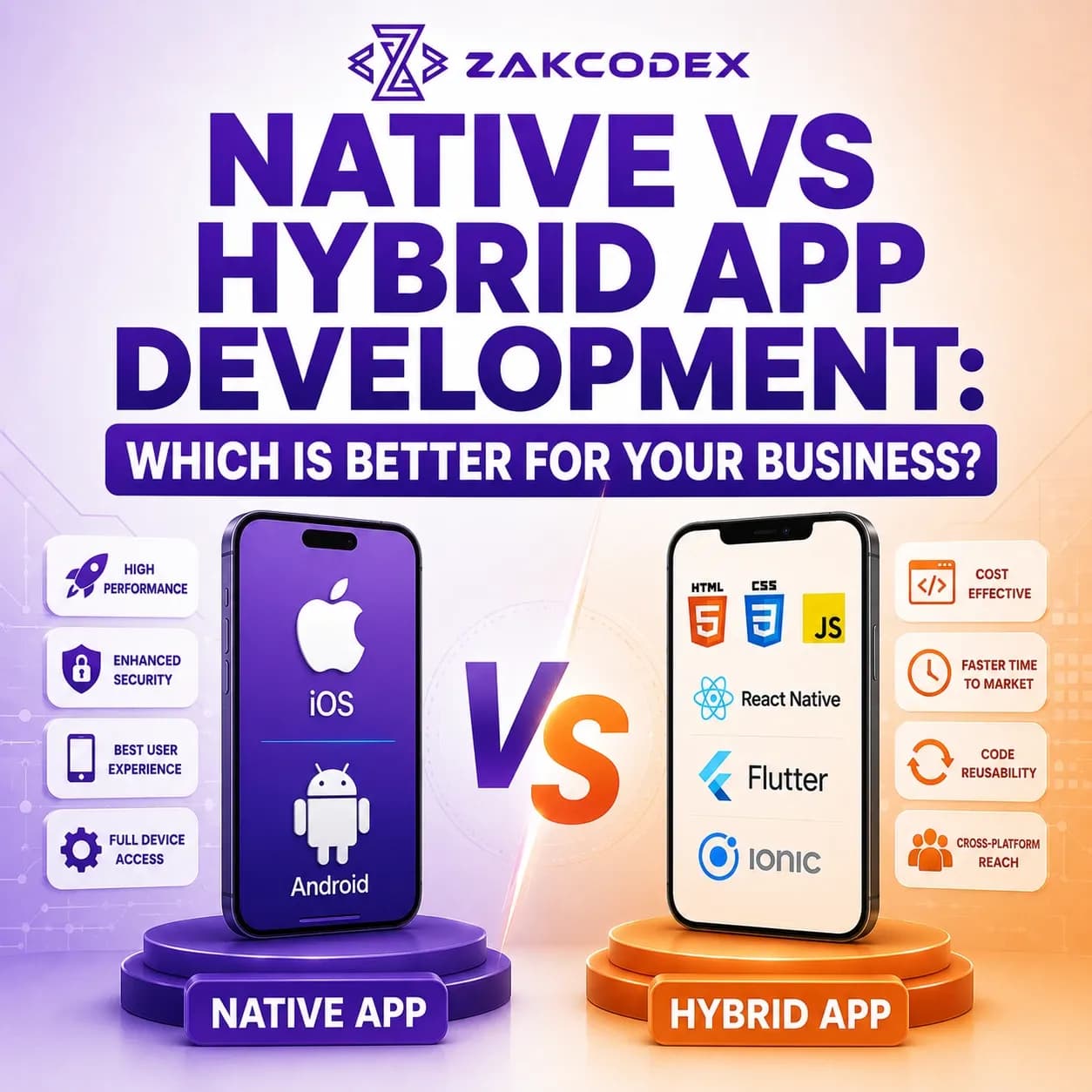
For most business apps, React Native provides the right balance of cost and performance.
However, extremely complex applications such as high end gaming apps may still benefit from native development.
When Should You Use React Native for Mobile Apps?
React Native is a good choice for many types of applications.
It works best when:
- You want to build apps for both Android and iOS
- You want faster development cycles
- Your team already knows React JS
- You want to reduce development costs
- Your app focuses on UI and business logic
Examples of apps suitable for React Native include:
- E-commerce apps
- Social media apps
- Business applications
- Startup MVPs
- Content-based apps
Limitations of React JS for Mobile Development
Even though React Native is powerful, there are some limitations to consider.
1. Some Features Need Native Code
Certain device features, such as advanced animations or hardware integrations may require native code.
2. Large Apps May Need Optimization
Very large applications sometimes require additional performance optimization.
3. Dependency on Third Party Libraries
React Native often relies on third party plugins to access device features.
If those plugins are outdated, it can slow development.
How React JS Knowledge Helps Mobile Developers
Developers who already know React JS have a significant advantage when learning React Native.
Many concepts remain the same, such as:
- Components
- Props
- State management
- Hooks
- Lifecycle methods
This makes React Native easier to adopt compared to learning completely new technologies like Swift or Kotlin.
React Native vs Other Mobile Frameworks
There are several frameworks used for cross platform mobile development.
Here is how React Native compares.
React Native vs Flutter
Flutter, created by Google, uses the Dart programming language.
React Native uses JavaScript.
React Native advantages:
- Larger developer community
- Easier learning curve for web developers
- Mature ecosystem
Flutter advantages:
- Faster rendering engine
- More consistent UI across platforms
Both frameworks are excellent choices depending on project needs.
Future of React Based Mobile Development
React and React Native continue to evolve with improvements in performance, architecture, and tooling.
Major trends include:
- Improved native rendering systems
- Better performance optimization
- Integration with modern backend technologies
- Growing enterprise adoption
Because of its strong ecosystem and continuous updates, React Native remains one of the most popular frameworks for mobile development.
Why Businesses Choose Professional Development Teams
Building a mobile application involves more than just choosing a framework. It requires planning, UI design, backend development, testing, and deployment.
Working with experienced developers ensures your application is scalable, secure, and optimized for performance.
Professional development teams evaluate your business needs and choose the best technology stack, whether that includes React Native or other frameworks.
Conclusion
React JS itself is not used directly for building mobile apps, but it plays a crucial role in mobile development through React Native. By combining React's component based architecture with native mobile rendering, React Native allows developers to build high quality applications for both Android and iOS using a single codebase.
This approach saves development time, reduces costs, and allows businesses to launch mobile apps faster.
If you are planning to build a mobile application, partnering with experienced developers like ZakCodeX can help you select the right technology stack and deliver a scalable solution that meets your business goals.