The UK ecommerce industry continues to grow rapidly, with businesses of all sizes seeking scalable, secure, and SEO-friendly online store solutions. When choosing an ecommerce platform, two names dominate the conversation: Shopify and WooCommerce.
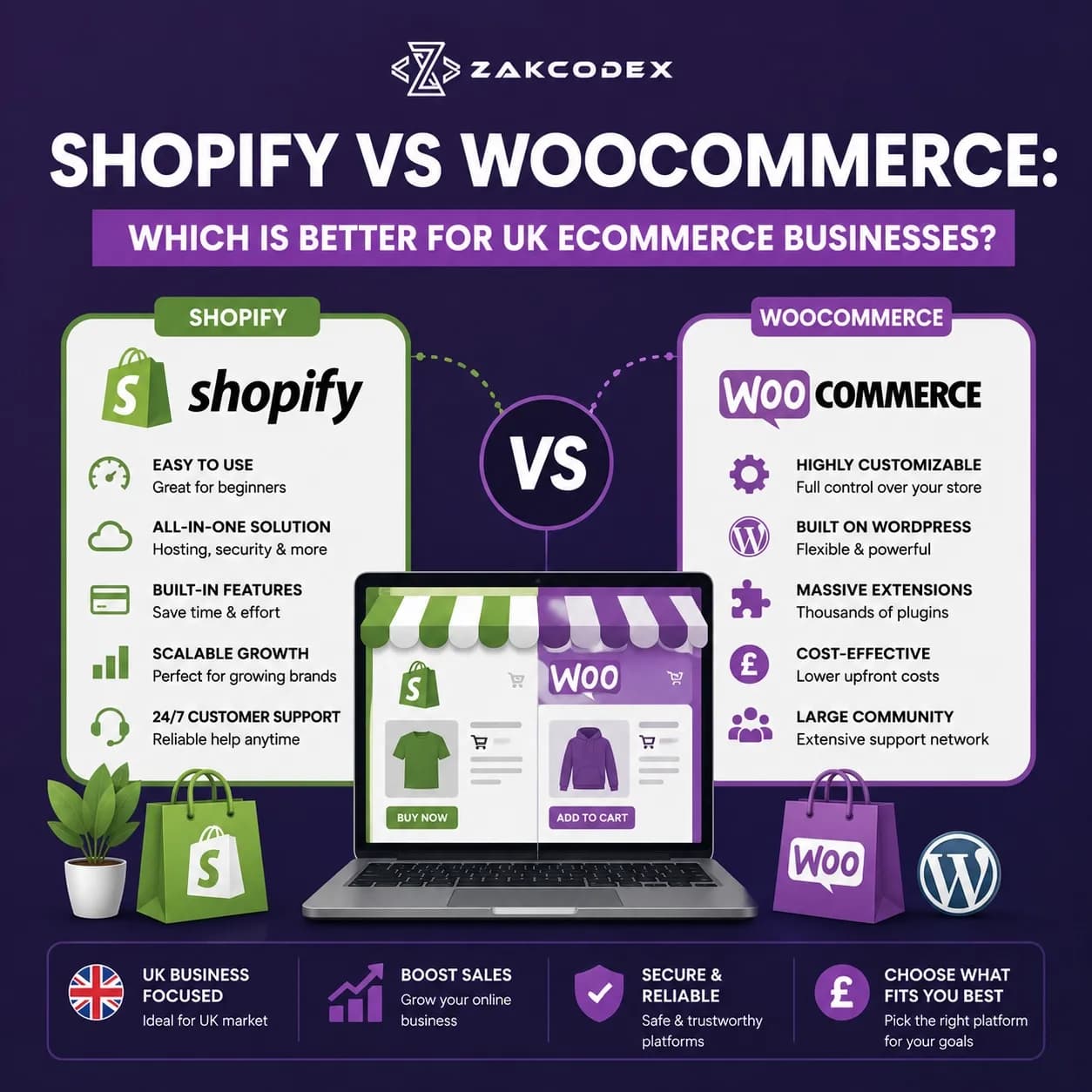
Both platforms power millions of online stores worldwide, but they serve different business needs. Shopify is a hosted ecommerce solution designed for simplicity and scalability, while WooCommerce is an open-source WordPress ecommerce plugin that offers extensive customization and flexibility. Industry comparisons consistently highlight Shopify's ease of use and managed infrastructure versus WooCommerce's customization and ownership advantages.
For UK businesses, the decision goes beyond features. Factors such as SEO performance, payment gateways, VAT compliance, scalability, website maintenance, and long-term costs all influence which platform delivers the best return on investment.
In this guide, we'll compare Shopify and WooCommerce across every important aspect to help UK ecommerce businesses make the right choice.
Understanding Shopify and WooCommerce
What is Shopify?
Shopify is a fully hosted ecommerce platform that enables businesses to create, manage, and scale online stores without worrying about hosting, security, updates, or technical maintenance.
Key Shopify Features:
- Hosted infrastructure
- Built-in security
- Mobile-responsive themes
- App marketplace
- Multi-channel selling
- Integrated payment processing
- Inventory management
- AI-powered ecommerce tools
Shopify is widely recognized for its user-friendly interface and simplified store management experience.
What is WooCommerce?
WooCommerce is an open-source ecommerce plugin built for WordPress. It transforms a standard WordPress website into a fully functional ecommerce store.
Key WooCommerce Features:
- Open-source architecture
- Unlimited customization
- Full code ownership
- WordPress integration
- Extensive plugin ecosystem
- Flexible payment gateways
- Advanced content marketing capabilities
WooCommerce is often preferred by businesses requiring custom functionality, advanced SEO control, and full ownership of their ecommerce infrastructure.
Shopify vs WooCommerce: Quick Comparison
| Feature | Shopify | WooCommerce |
|---|---|---|
| Ease of Use | Excellent | Moderate |
| Hosting | Included | Self-hosted |
| Security | Managed | User Managed |
| SEO | Strong | Excellent |
| Customization | Good | Unlimited |
| Maintenance | Minimal | Ongoing |
| Scalability | Excellent | Hosting Dependent |
| Setup Speed | Fast | Moderate |
| Technical Skills Required | Low | Medium to High |
| Ownership Control | Limited | Complete |
Ease of Use: Which Platform Is Simpler?
For most UK business owners, ease of use is a major deciding factor.
Shopify
Shopify is designed specifically for ecommerce. Users can launch a store within hours using its intuitive dashboard, guided setup process, and drag-and-drop theme customization.
Benefits include:
- No coding required
- Automated updates
- Built-in hosting
- Simplified store management
Many ecommerce experts consider Shopify one of the easiest platforms for launching an online business.
WooCommerce
WooCommerce requires:
- Domain setup
- Hosting configuration
- WordPress installation
- Plugin management
- Security optimization
While the learning curve is steeper, businesses gain significantly more control over every aspect of their website.
Winner: Shopify
For beginners and non-technical business owners, Shopify offers a significantly easier setup and management experience.
SEO Performance Comparison
Search visibility remains critical for UK ecommerce businesses.
Shopify SEO
Shopify includes:
- XML sitemaps
- Mobile optimization
- SSL certificates
- Structured data support
- Fast loading infrastructure
- Canonical URLs
Shopify provides solid SEO functionality out of the box.
WooCommerce SEO
WooCommerce benefits from the entire WordPress ecosystem.
Advantages include:
- Full URL control
- Advanced schema implementation
- Custom metadata
- Powerful SEO plugins
- Content marketing flexibility
- Technical SEO customization
Many SEO professionals consider WordPress and WooCommerce superior for advanced SEO strategies because of the extensive customization available.
Winner: WooCommerce
If SEO is a major growth channel, WooCommerce offers greater flexibility and optimization opportunities.
Website Speed and Performance
Page speed directly affects:
- User experience
- Conversion rates
- Search rankings
Shopify Performance
Shopify manages:
- CDN delivery
- Hosting infrastructure
- Security optimization
- Performance updates
This ensures consistent performance regardless of technical expertise.
WooCommerce Performance
WooCommerce performance depends on:
- Hosting provider
- Plugin quality
- Server configuration
- Optimization practices
A properly optimized WooCommerce site can outperform Shopify, but achieving that often requires technical expertise.
Winner: Shopify
For most UK businesses, Shopify delivers more reliable performance with less effort.
Customization and Flexibility
This is where the biggest difference exists.
Shopify Customization
Shopify offers:
- Theme customization
- Shopify Apps
- Shopify APIs
- Custom coding options
However, businesses remain within Shopify's ecosystem.
WooCommerce Customization
WooCommerce provides:
- Full code access
- Unlimited plugin integrations
- Custom functionality
- Bespoke ecommerce experiences
- Complete design freedom
Developers can create highly customized ecommerce solutions impossible to achieve on many hosted platforms.
Winner: WooCommerce
For businesses requiring unique functionality, WooCommerce is unmatched.
Security and Maintenance
Shopify
Shopify handles:
- Security patches
- Hosting security
- PCI compliance
- SSL certificates
- Platform updates
Business owners focus on sales rather than maintenance.
WooCommerce
WooCommerce requires:
- Security monitoring
- Plugin updates
- Backups
- Hosting management
- Malware protection
While control is greater, responsibility increases.
Winner: Shopify
Shopify significantly reduces maintenance workload.
Scalability for Growing UK Businesses
As ecommerce businesses grow, scalability becomes essential.
Shopify Scalability
Shopify handles:
- Traffic spikes
- Inventory growth
- International selling
- Enterprise expansion
Its infrastructure automatically scales with demand.
WooCommerce Scalability
WooCommerce can scale effectively but depends on:
- Hosting quality
- Optimization
- Technical expertise
Large WooCommerce stores often require dedicated development resources.
Winner: Shopify
For predictable growth and reduced operational complexity, Shopify excels.
Content Marketing and Blogging
Content marketing remains one of the most effective strategies for ecommerce SEO.
Shopify Blogging
Shopify includes a blogging system but offers limited flexibility compared to WordPress.
WooCommerce Blogging
WooCommerce benefits from WordPress, which remains the world's leading content management system.
Advantages include:
- Content hubs
- Topic clusters
- Advanced SEO plugins
- Better editorial workflows
Winner: WooCommerce
For content-driven ecommerce strategies, WooCommerce offers superior capabilities.
UK Payment Gateway Support
Both platforms support major UK payment providers including:
- Stripe
- PayPal
- Klarna
- Square
- Worldpay
- Sage Pay
However:
Shopify
- Shopify Payments integration
- Additional fees for some external gateways
WooCommerce
- Greater payment processor flexibility
- No platform-imposed payment restrictions
Winner: WooCommerce
More freedom and flexibility for UK merchants.
Total Cost Comparison
Shopify Costs
Typical expenses include:
- Monthly subscription
- Premium themes
- App subscriptions
Costs are predictable and easier to budget.
WooCommerce Costs
Expenses may include:
- Hosting
- Domain
- Premium plugins
- Security tools
- Developer support
While WooCommerce starts cheaper, costs can increase as complexity grows.
Winner: Depends on Business Needs
Small businesses often prefer Shopify's predictable pricing.
Large customized stores may find WooCommerce more cost-effective long term.
Which Platform Is Better for UK Ecommerce Businesses?
Choose Shopify If:
- You want a fast launch.
- You prefer minimal maintenance.
- You lack technical expertise.
- You want predictable costs.
- You need reliable scalability.
Choose WooCommerce If:
- SEO is a primary growth channel.
- You need extensive customization.
- You already use WordPress.
- You want full ownership.
- You have development resources.
Professional Shopify Development Services
Many UK businesses choose Shopify because it combines simplicity, security, scalability, and operational efficiency.
If you're planning to build or migrate your ecommerce store, professional Shopify development can ensure optimal performance, SEO readiness, and conversion-focused design.
Explore our expert Shopify Web Development Services. Whether you're launching a new store or upgrading an existing ecommerce website, ZakCodeX can help create a scalable Shopify solution tailored to your business goals.
Final Verdict
For most UK ecommerce businesses in 2026, Shopify offers the best balance of usability, performance, security, and scalability. Businesses focused on rapid growth and operational simplicity will likely achieve faster results with Shopify.
However, WooCommerce remains the superior choice for organizations requiring complete control, extensive customization, and advanced SEO flexibility.
The best platform ultimately depends on your business goals, technical resources, and long-term growth strategy.