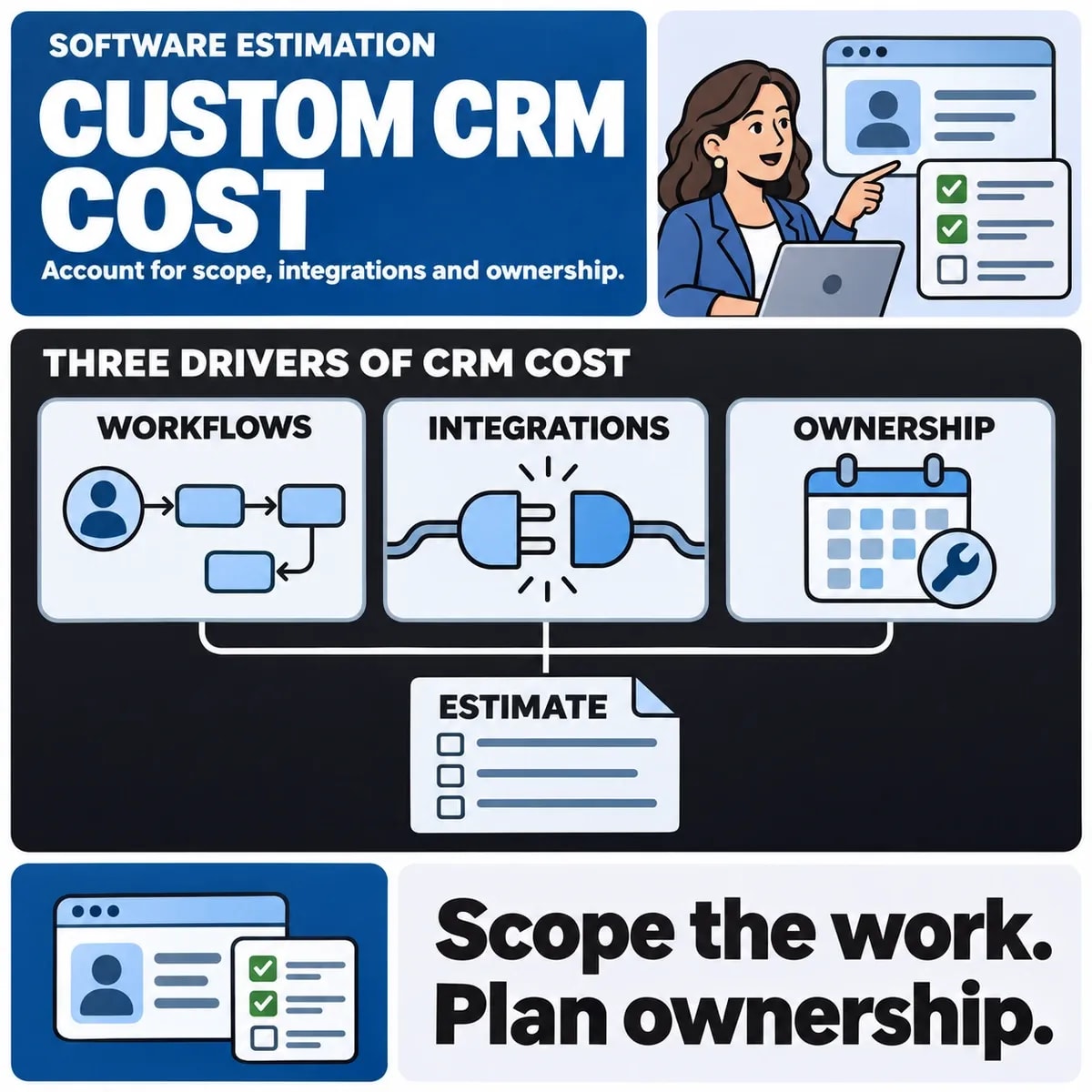

Custom CRM development cost depends on the customer workflows the application must support and the responsibilities included in delivery. A useful estimate names the scope, assumptions, exclusions and ongoing operating costs. A generic price range cannot establish what a particular business needs to spend.
Start with the first useful workflow and the existing systems it touches. Ask suppliers to estimate the same boundary. This makes differences in proposed work easier to assess before comparing totals.
Define the first release in business terms
List users, activities and outcomes. For a fictional sales team, the first release might cover recording an enquiry, assigning follow-up, managing a quotation and handing an accepted order to operations. Lead scoring, complex automation and additional reporting could be separate decisions.
The example is a scoping exercise, not a ZakCodeX price or client result. Identify which tasks staff must complete on day one and which existing tools can remain. A smaller first release is useful only if the complete workflow still works.
Break the estimate into visible work
| Scope area | Questions that change the estimate | Useful output |
|---|---|---|
| Workflows and roles | How many distinct processes and permission boundaries? | Journey and role matrix |
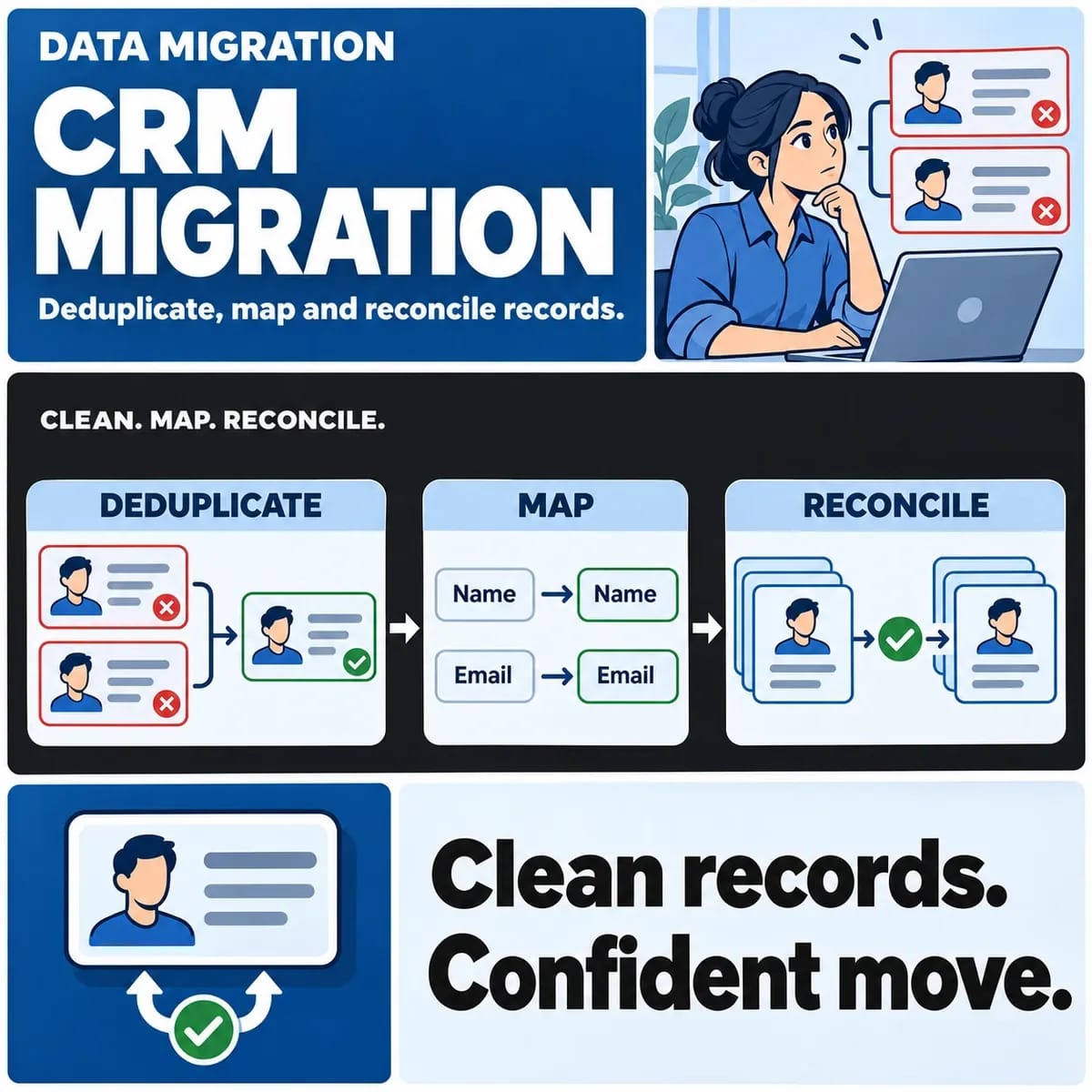
| Data migration | Which sources, duplicates and relationships need review? | Mapping and reconciliation plan |
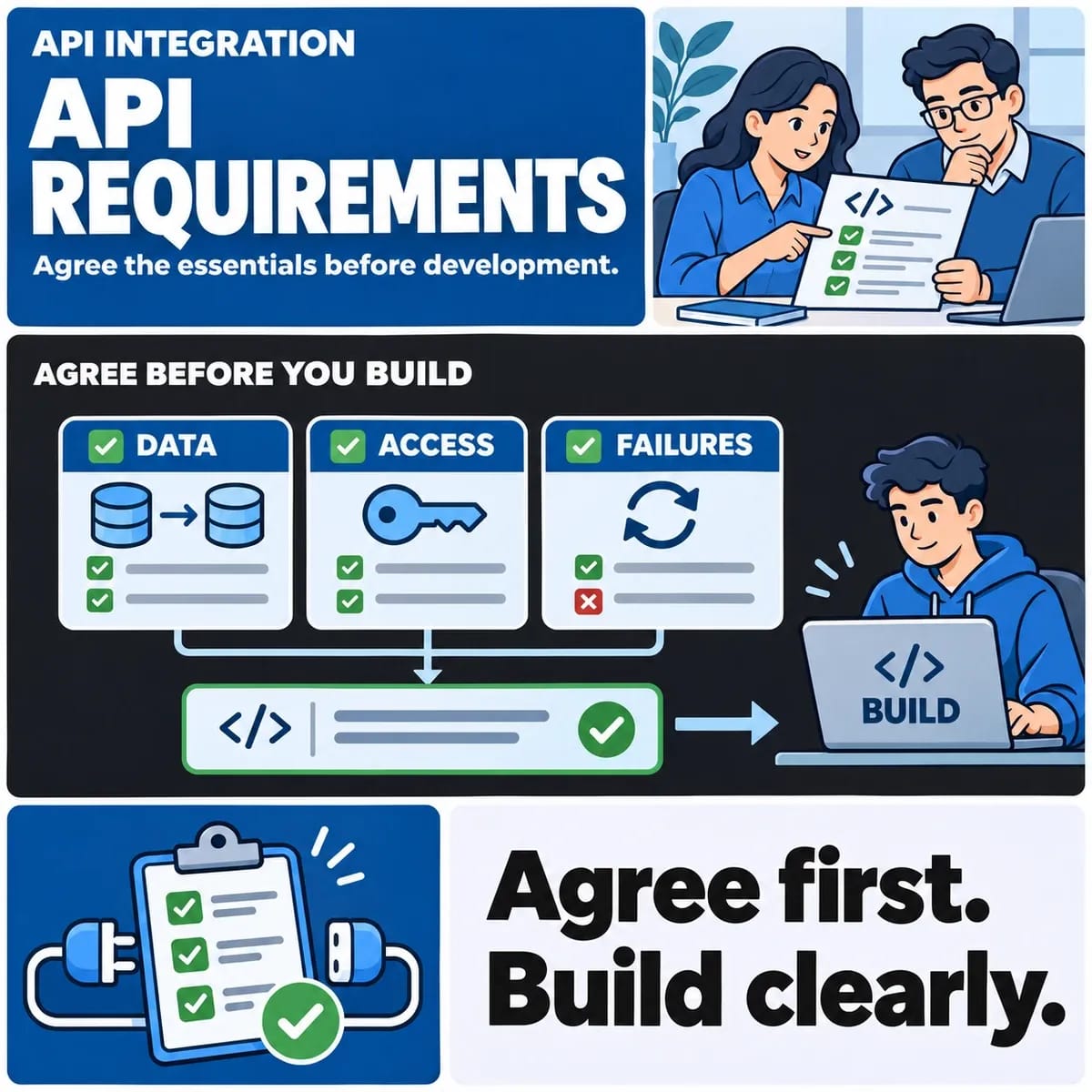
| Integrations | Which supported APIs and failure cases are involved? | Connection contract and test scope |
| Reporting | Which decisions, definitions and exports are required? | Metric and access requirements |
| Operations | Who releases, supports, backs up and restores the system? | Operating responsibility plan |
Ask the supplier to explain uncertain items and the investigation needed to price them. A line labelled “integration” can hide very different assumptions about mapping, reconciliation and support.
Assess data before assuming migration is small
Inventory spreadsheets, current CRM records, documents and any linked operational data. Review quality and ownership using safe representative samples. A customer list with duplicated accounts and inconsistent identifiers needs different work from a controlled export with documented relationships.
The CRM migration guide explains mapping and reconciliation. Keep migration acceptance in the estimate so transferred records can be verified against agreed checks.
Include connected systems and their exceptions
Document accounting, email, scheduling, customer portal and other required connections. Confirm access to the relevant APIs and test environments. Request a plan for unavailable services, duplicate events and changes that arrive after a record has moved to another state.
The API requirements guide supports that work. Estimate against the actual contract rather than assuming a named platform makes the connection routine.
Compare custom development with existing products
Review whether an existing CRM can support the requirement through configuration, a supported extension or an integration. Include licences, administration and the cost of adapting the workflow in the comparison. A custom build adds responsibility for maintaining the application.
Ask for a demonstration of the intended tasks using controlled data. A feature checklist cannot show whether a particular permission, record relationship or approval step works as required. Record the gaps that materially justify additional development.
Define ownership and ongoing costs
Agree code and account access, hosting, monitoring, dependency maintenance, user support and change requests. Clarify what is included in a maintenance arrangement and what is separately estimated. The agreement should identify who can respond when a connected workflow fails.
Include backups, recovery testing and a practical exit route. Where contractual or privacy questions arise, obtain the appropriate specialist advice for the project. No ownership right or compliance outcome should be inferred from a marketing price.
Ask for comparable proposals
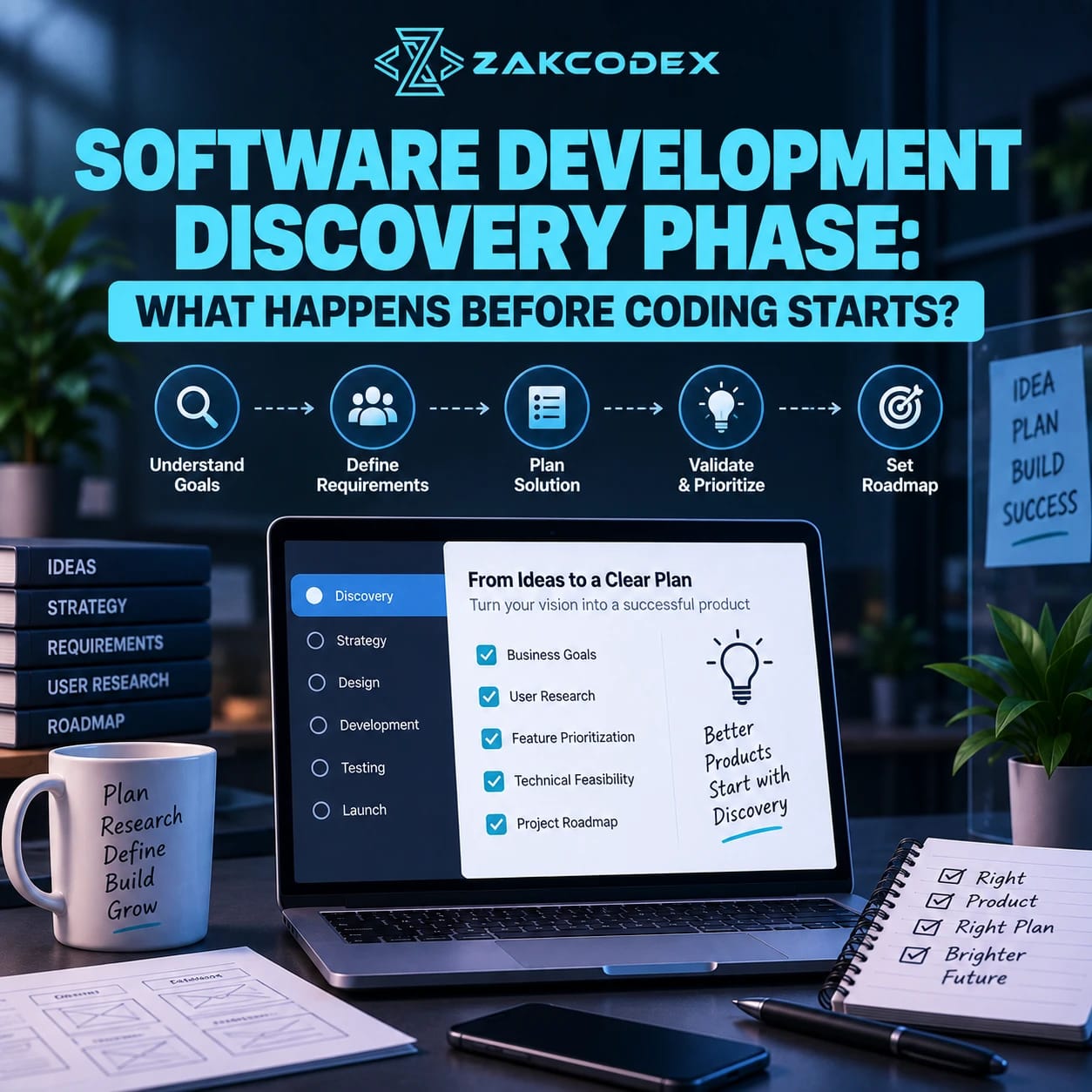
Give each supplier the same first-release scope, sample workflows, migration outline, integration dependencies and acceptance criteria. Request assumptions and exclusions alongside the commercial proposal. Separate confirmed work from items that require discovery.
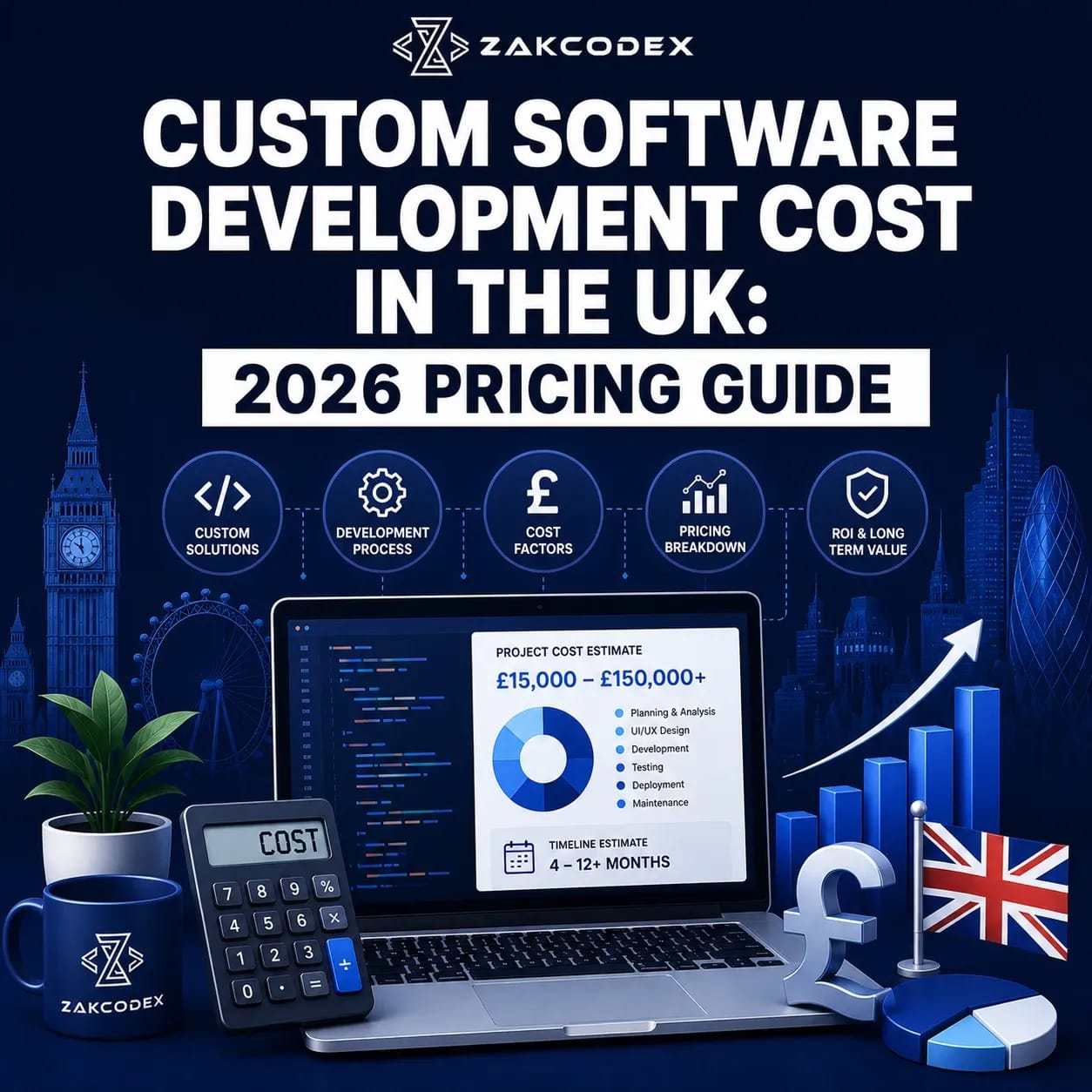
This guide offers no verified fixed ZakCodeX CRM price, universal market range or delivery guarantee. A scoped CRM development discussion should establish what can be estimated and what needs investigation first. Use the general software cost guide for broader budgeting context while keeping CRM-specific requirements explicit.