Mobile apps have become essential for modern businesses that want to deliver faster, more personalized digital experiences. If you want the highest performance, strong security, and seamless user experience, native mobile app development is often the best approach.
Businesses working with a professional Mobile App Development Company like ZakCodeX often choose native apps because they are built specifically for platforms like Android and iOS, allowing developers to fully utilize device capabilities.
In this guide, we will explain what native mobile app development is, how it works, its benefits, technologies, costs, and when businesses should choose it. If you are planning to build a mobile app, this article will help you understand whether native development is the right solution for your project.
What Is Native Mobile App Development?
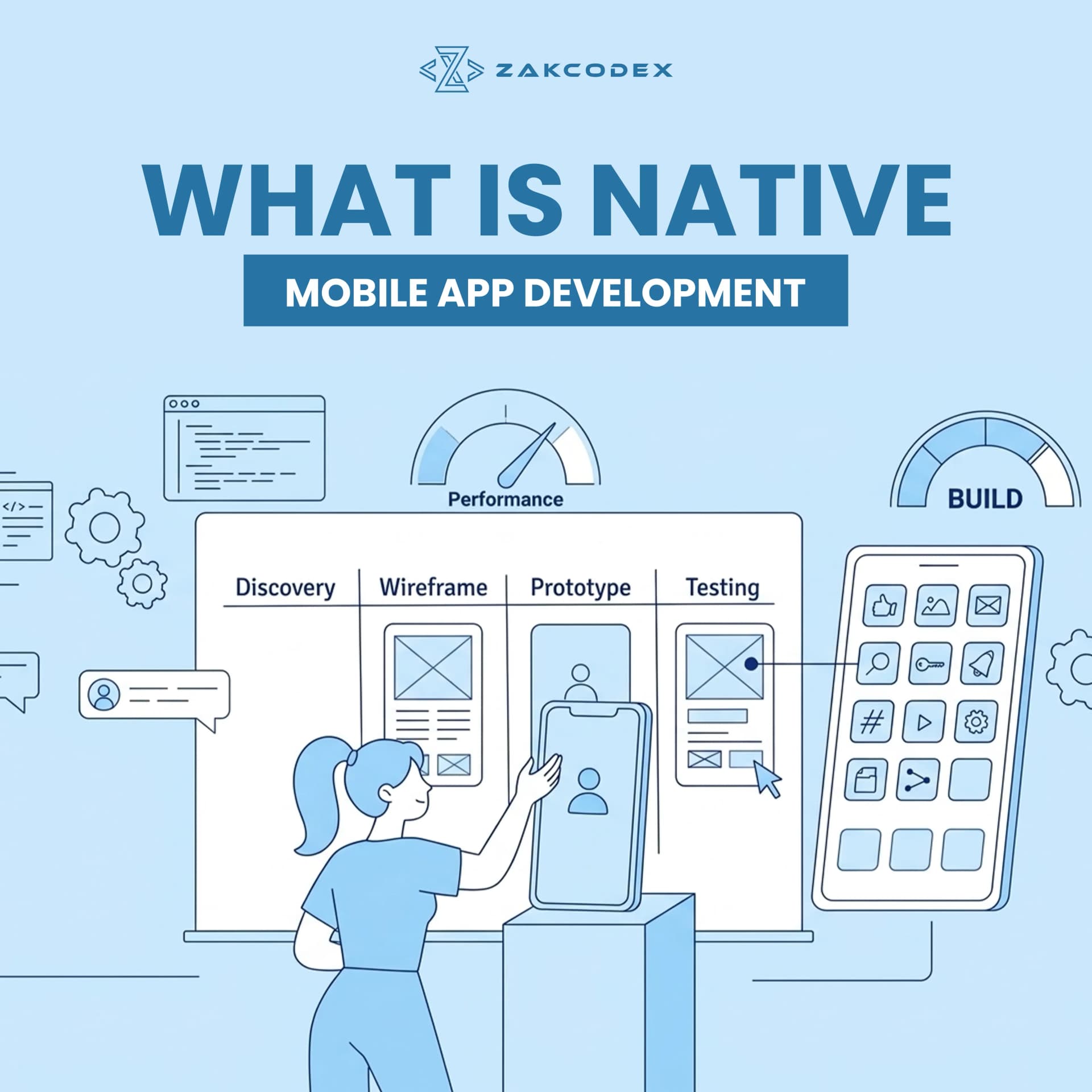
Native mobile app development refers to the process of building mobile applications specifically for a single operating system, such as Android or iOS, using platform-specific programming languages and development tools.
These apps are designed to run directly on the device and are optimized for the platform’s hardware, operating system, and user interface guidelines.
For example:
- Android apps are developed using Kotlin or Java with Android Studio
- iOS apps are developed using Swift or Objective C with Xcode
Because native apps are built specifically for a platform, they offer better performance, smoother animations, stronger security, and deeper integration with device features such as GPS, camera, microphone, and push notifications.
Many businesses partner with companies like ZakCodeX to develop native applications that deliver a premium mobile experience.
How Native Mobile App Development Works
Native app development follows a structured process where developers create separate applications for each platform.
1. Planning and Strategy
The process begins with identifying:
- Target audience
- Platform choice (Android, iOS, or both)
- App functionality
- Business objectives
2. UI/UX Design
Designers create interfaces following platform guidelines:
- Material Design for Android
- Human Interface Guidelines for iOS
This ensures the app feels natural to users of that platform.
3. Development
Developers write code using platform specific tools.
Android Development Stack
- Kotlin
- Java
- Android Studio
- Android SDK
- Jetpack libraries
iOS Development Stack
- Swift
- Objective C
- Xcode
- iOS SDK
- Cocoa Touch
4. Testing
Quality assurance teams test the application for:
- Performance
- Security
- Compatibility
- Bugs
Testing includes real devices and emulators.
5. Deployment
After testing, the app is published on:
- Google Play Store
- Apple App Store
6. Maintenance
Native apps require updates for:
- OS updates
- Security patches
- New features
- Bug fixes
Native Mobile App Development Technologies
Here are the most widely used technologies in native app development.
Android Technologies
- Kotlin
- Java
- Android SDK
- Android Studio
- Firebase
- Gradle
iOS Technologies
- Swift
- Objective C
- Xcode
- SwiftUI
- UIKit
- CocoaPods
These technologies help developers build fast, scalable, and secure mobile applications.
Key Features of Native Mobile Apps
Native apps offer several advanced features that make them the preferred choice for many businesses.
High Performance
Native apps are compiled specifically for the platform, making them faster and more efficient than hybrid or web apps.
Better User Experience
They follow platform specific UI standards which make the app feel natural and intuitive.
Full Access to Device Features
Native apps can directly access device hardware such as:
- Camera
- GPS
- Bluetooth
- Microphone
- Contacts
- Sensors
Strong Security
Native development allows developers to implement platform level security measures like:
- Biometric authentication
- Secure data storage
- Encryption
Offline Capability
Many native apps work even without internet connectivity.
Native Apps vs Hybrid Apps
Understanding the difference between native and hybrid development helps businesses make better decisions.
| Feature | Native Apps | Hybrid Apps |
|---|---|---|
| Performance | Very High | Moderate |
| User Experience | Excellent | Good |
| Development Cost | Higher | Lower |
| Platform Specific | Yes | No |
| Device Integration | Full Access | Limited |
Hybrid frameworks like React Native or Flutter allow cross-platform development, but native apps still offer superior performance and reliability.
Advantages of Native Mobile App Development
1. Superior Performance
Native apps run directly on the device without additional layers, making them extremely fast.
2. Smooth Animations
Animations and transitions are smoother because native apps use platform optimized graphics engines.
3. Better Security
Native apps can leverage advanced security features such as:
- Secure keychain
- Biometric authentication
- OS level encryption
4. Scalability
Native architecture supports large scale applications and complex features.
5. Improved App Store Ranking
Apps built using native technologies often perform better in App Store and Google Play rankings because they offer better performance and user engagement.
Disadvantages of Native App Development
Despite its advantages, native development also has some limitations.
Higher Development Cost
Because separate apps are built for iOS and Android, development costs can be higher.
Longer Development Time
Developers must build and maintain two separate codebases.
Maintenance Effort
Updates must be implemented individually for each platform.
However, for businesses focused on performance, security, and user experience, the benefits often outweigh the cost.
When Should Businesses Choose Native Mobile App Development?
Native development is ideal in several scenarios.
High Performance Applications
Apps requiring fast processing such as:
- Gaming apps
- Streaming apps
- Financial apps
Complex Features
Apps that rely heavily on device features like:
- Augmented reality
- Real time GPS tracking
- Advanced animations
Large Scale Applications
Enterprise applications with complex architecture benefit from native development.
Long-Term Digital Products
If your app is a core part of your business model, native development ensures long-term scalability and reliability.
Cost of Native Mobile App Development
The cost of building a native mobile application depends on several factors.
Key Cost Factors
- App complexity
- Features and integrations
- UI/UX design
- Development team location
- Testing and maintenance
Estimated Cost Range
| App Type | Estimated Cost |
|---|---|
| Simple App | $15,000 to $40,000 |
| Medium Complexity | $40,000 to $100,000 |
| Complex App | $100,000+ |
Working with an experienced development team ensures the project stays within budget while maintaining quality.
Best Practices for Native Mobile App Development
To build a successful native app, developers should follow these best practices.
Focus on User Experience
Apps should be intuitive and easy to navigate.
Follow Platform Guidelines
Design and functionality should follow Android and iOS standards.
Optimize Performance
Efficient code and optimized assets improve app performance.
Prioritize Security
Implement encryption, secure APIs, and authentication systems.
Continuous Testing
Regular testing ensures stability and bug free performance.
Future of Native Mobile App Development
Native development continues to evolve as mobile technologies advance.
Some emerging trends include:
- AI-powered mobile apps
- AR and VR integration
- 5G-enabled applications
- Advanced mobile security
- IoT-connected applications
With increasing demand for high-performance mobile applications, native development will remain a key strategy for businesses worldwide.
Conclusion
Native mobile app development remains one of the most powerful ways to build high-performance, secure, and scalable mobile applications. By creating apps specifically for Android and iOS platforms, businesses can deliver a superior user experience and fully leverage device capabilities.
Although native development requires separate codebases and higher investment, the benefits in terms of speed, reliability, and functionality make it the preferred choice for many companies.
If you are planning to build a mobile application, working with an experienced development team like ZakCodeX can help transform your idea into a successful product.