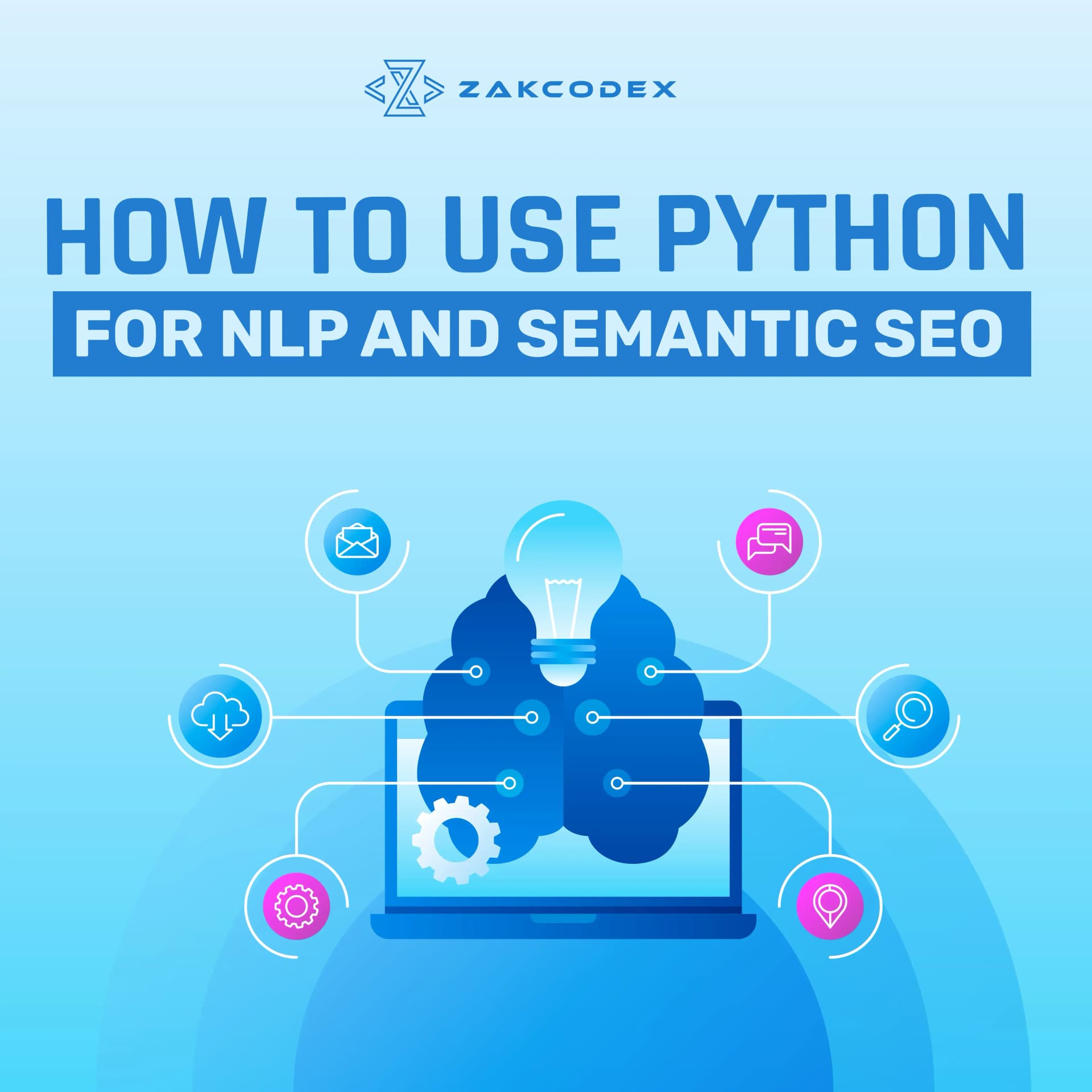
Python has become one of the most powerful tools in digital marketing and search engine optimization. Its flexibility and wide range of libraries make it ideal for automating SEO tasks, analyzing text, and improving how search engines understand your content.
When combined with Natural Language Processing (NLP) techniques, Python allows marketers and SEO professionals to take optimization far beyond keywords. This approach is known as Semantic SEO, a strategy that focuses on meaning, context, and user intent instead of keyword repetition.
In this article, we’ll explore how Python can be used for NLP and Semantic SEO, what tools are involved, and how these techniques can help you create content that ranks higher and performs better.
Understanding NLP and Semantic SEO
Natural Language Processing, or NLP, is a field of artificial intelligence that helps computers understand human language. It allows machines to process text the way people do by recognizing grammar, sentiment, and context.
In SEO, NLP helps analyze content to determine how well it matches user intent. Instead of simply counting keywords, it evaluates the relationships between words, phrases, and topics.
Semantic SEO, on the other hand, focuses on creating content that covers a topic deeply and contextually. It aims to help search engines connect your content to the real meaning behind a query. For example, Google’s algorithm now uses models like BERT and MUM to understand not just what a keyword says but what a user really wants.
By combining Python and NLP, you can identify semantic gaps, optimize for related topics, and structure your content for search engines in a more intelligent way.
Why Python Is the Perfect Tool for NLP and SEO
Python is a preferred language for both data science and automation. It is easy to learn, integrates well with marketing tools, and offers a large collection of libraries for text processing and analysis.
Some key advantages of using Python for NLP and SEO include:
- Automation of repetitive SEO tasks such as scraping keywords, analyzing text, and generating reports.
- Access to advanced NLP libraries like NLTK, spaCy, Gensim, and Transformers.
- Integration with data visualization tools like Matplotlib and Plotly for analyzing content performance.
- Compatibility with APIs such as Google Search Console, OpenAI, or Hugging Face for large-scale analysis.
With these tools, you can move beyond traditional keyword optimization and create strategies built on data and meaning.
Step 1: Collecting and Preparing Text Data
Before applying NLP, you need text data. This can come from your own website, competitors, or public sources such as Google Search results or social media.
Python libraries like BeautifulSoup and Scrapy are perfect for collecting website data. They allow you to crawl web pages and extract titles, headings, and body text. Once collected, this data is cleaned by removing unnecessary tags, punctuation, and symbols using libraries like re (regular expressions) or NLTK.
Here’s a simple example of cleaning text in Python:
import re
text = "Learn SEO with Python! Visit our website: https://example.com"
clean_text = re.sub(r'http\S+|[^a-zA-Z\s]', '', text)
print(clean_text.lower())
This process prepares your text for deeper analysis.
Step 2: Tokenization and Lemmatization
Once the data is clean, the next step is to break it down into smaller pieces. Tokenization divides text into words or sentences, while lemmatization reduces words to their base form.
Python’s spaCy library handles this efficiently:
import spacy
nlp = spacy.load("en_core_web_sm")
doc = nlp("Python tools are powerful for Semantic SEO optimization")
for token in doc:
    print(token.text, token.lemma_)
Lemmatization helps search engines recognize that words like “optimize,” “optimized,” and “optimization” all represent the same concept. This step is essential for building topic clusters and understanding semantic relationships.
Step 3: Keyword Clustering and Semantic Grouping
Traditional keyword research focuses on finding individual keywords. Semantic SEO uses keyword clustering, which groups related terms based on meaning and context.
Python’s Gensim or scikit-learn can be used to perform clustering using methods like TF-IDF or Word2Vec.
For example, if you’re targeting the topic “artificial intelligence in marketing,” keyword clusters might include terms like “machine learning,” “AI tools,” and “automation in advertising.” These clusters help you create content that covers a topic comprehensively rather than chasing individual keywords.
By applying vectorization, you can identify which terms are closely related and structure your content accordingly.
Step 4: Sentiment and Intent Analysis
Sentiment analysis helps you understand the emotional tone behind text. It is useful for analyzing customer reviews, blog comments, or even competitor content.
With Python’s TextBlob or VADER sentiment analyzer, you can categorize content as positive, neutral, or negative. This helps identify how users perceive certain topics and adjust your SEO strategy accordingly.
Intent analysis takes this further by identifying what users are trying to achieve with a search query. For instance, a query like “best Python SEO tools” suggests commercial intent, while “how to learn Python for SEO” indicates informational intent. Recognizing intent helps you craft content that fits user expectations.
Step 5: Using Topic Modeling to Identify Content Gaps
Topic modeling is a powerful NLP technique that groups text into related themes or topics. Using algorithms like Latent Dirichlet Allocation (LDA), Python can analyze large amounts of content and show what subjects are already well-covered and what areas need improvement.
For example, if your competitors write extensively about “SEO automation” but ignore “semantic keyword analysis,” that’s an opportunity for you to fill a content gap and attract new visitors.
By identifying under-represented topics, you can structure your website around broader themes and signal to search engines that your site is an authority on a subject.
Step 6: Building Semantic Graphs and Entity Mapping
Modern search engines rely heavily on entities and relationships between them. Entities are specific things like people, places, or brands.
With Python, you can build semantic graphs that map how different entities relate to each other in your content. Libraries like spaCy and NetworkX make this possible.
For instance, in an article about “SEO,” related entities might include “Google,” “backlinks,” “rankings,” and “content optimization.” Creating content that connects these entities naturally helps your pages align better with Google’s understanding of the topic.
Step 7: Generating Structured Data and Schema Markup
Schema markup helps search engines interpret your content more effectively. It adds context by defining what type of information your page contains, such as products, FAQs, reviews, or blog posts.
Python can automate the generation of JSON-LD schema for large websites. By combining data from your content with NLP analysis, you can dynamically generate structured data tags for each page. This makes it easier for Google to display rich snippets and enhances visibility in search results.
Step 8: Content Scoring and Optimization
After analyzing text semantically, Python can help score your content based on keyword usage, sentiment, and topic coverage.
You can build a script that checks whether a page includes all important entities, headings, and internal links. It can also highlight missing semantic keywords and measure how well your page aligns with the intent of the target query.
Tools like TF-IDF analysis or BERT embeddings can quantify how relevant your content is compared to top-ranking competitors. This approach helps you continuously refine and improve your on-page SEO.
The Future of SEO with NLP and Python
Search engines are becoming more intelligent, and ranking today requires understanding meaning rather than focusing on single keywords. Using Python for NLP enables you to keep pace with this evolution.
By analyzing search intent, entity relationships, and content depth, you can create pages that genuinely satisfy user needs. Python not only saves time by automating tedious tasks but also gives you insights that traditional SEO tools often overlook.
The integration of AI models, NLP frameworks, and semantic understanding is the next frontier of SEO. Those who master it will have a significant advantage in visibility and authority.