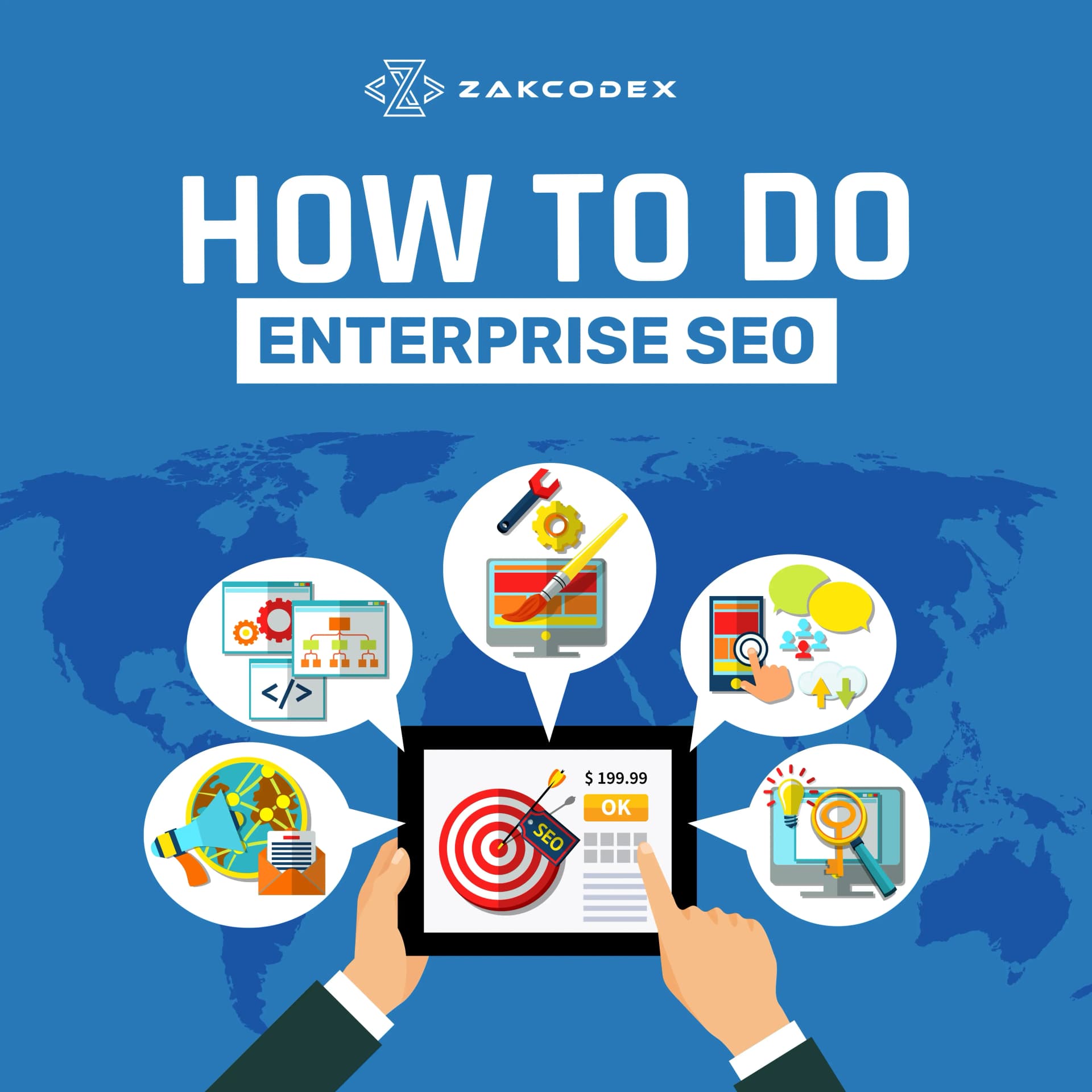
Enterprise SEO is the process of optimizing large websites with thousands of pages for better search visibility, traffic, and performance. Unlike standard SEO that focuses on smaller websites or local businesses, enterprise SEO requires advanced strategy, cross-department coordination, and automation.
Big brands and organizations that operate across multiple locations, languages, or product lines depend on enterprise SEO to maintain consistent rankings and authority at scale. It combines technical excellence, content precision, and strategic governance to ensure that every page works together toward a unified search strategy.
This guide explains how to do enterprise SEO step-by-step, including the tools, techniques, and mindset needed to manage complex digital ecosystems effectively.
Understanding Enterprise SEO
Enterprise SEO goes beyond optimizing single pages or keywords. It involves creating a scalable framework for large websites where hundreds or thousands of pages must align under one strategy.
The main goals of enterprise SEO are to:
- Strengthen brand visibility across global markets
- Maintain ranking consistency for high-value pages
- Optimize site structure for search engine crawlers
- Manage technical performance across multiple domains
- Improve conversions through targeted user intent
While smaller websites can make changes quickly, enterprise sites often face delays because of internal approvals, large content databases, and complex infrastructure. This is why enterprise SEO focuses on creating sustainable systems rather than isolated fixes.
1. Conduct a Comprehensive Technical Audit
A strong foundation begins with a technical audit. Enterprise websites often have legacy issues such as broken redirects, duplicate content, crawl errors, and inconsistent page indexing.
Start by analyzing:
- Site speed and Core Web Vitals
- Crawl efficiency using tools like Screaming Frog or Sitebulb
- Mobile responsiveness and structured data
- HTTPS and canonical tag implementation
- XML sitemap accuracy
Because large websites have interdependent sections, it is critical to use automation or scheduled crawls. Setting up regular automated audits helps detect technical issues early and prevents ranking loss due to structural problems.
2. Build a Scalable Site Architecture
A well-organized site structure helps both users and search engines navigate efficiently. For enterprise SEO, this means establishing a logical hierarchy that connects categories, subcategories, and individual pages in a consistent way.
Each section should flow naturally from general to specific topics. Product categories should interlink with related guides, and service pages should connect to case studies or blogs.
URL structures should remain clean and descriptive, using simple language that reflects the page’s content. Avoid unnecessary parameters that make crawling difficult.
A scalable architecture also prepares the website for future expansion without major redesigns.
3. Optimize Content at Scale
Content is still the core of SEO, but at the enterprise level, it must be managed strategically. Optimizing thousands of pages individually is not practical, so automation and templates become essential.
Start by categorizing your content into clusters. For example, group similar service or product pages under one hub. Then, use keyword mapping to assign primary and secondary keywords to each group.
Leverage content management systems (CMS) that allow bulk edits, metadata automation, and centralized updates. When you make a change in one area, it should automatically reflect across related pages.
Quality should never be compromised for quantity. Each piece of content must serve a clear purpose, address user intent, and support your brand authority.
4. Create a Governance Model
Enterprise SEO often involves multiple teams, including marketing, IT, design, and legal departments. A governance model ensures consistency and reduces confusion about who manages which part of the SEO process.
Define clear roles for content creation, technical maintenance, link building, and analytics. Establish an approval workflow that allows changes to be reviewed and implemented without unnecessary delays.
Create standardized templates for metadata, structured data, and internal linking. This prevents different departments from making changes that could conflict with the overall SEO strategy.
5. Focus on Automation and Tools
Automation is one of the biggest advantages in enterprise SEO. Large organizations can use automation tools to handle repetitive tasks like keyword tracking, site audits, reporting, and content updates.
Platforms such as BrightEdge, Conductor, and Semrush Enterprise offer insights at scale, helping teams monitor keyword trends, analyze competitors, and track site performance across regions.
Automated reporting also allows stakeholders to see real-time results without relying on manual updates. This improves transparency and helps management make data-driven decisions.
6. Strengthen Internal Linking
Internal linking helps distribute link equity and ensures that search engines understand the relationship between pages.
For large websites, creating an internal linking strategy is essential to avoid orphaned pages and improve crawl efficiency.
Each major content hub should link to relevant subpages, and those subpages should link back to the main category. Use descriptive anchor text that naturally fits within the content.
By maintaining a consistent link structure, you ensure that authority flows evenly across your website, improving rankings for both old and new pages.
7. Manage International SEO
Many enterprise websites serve audiences in different countries or languages. Managing international SEO ensures that users and search engines see the right version of your site.
Implement hreflang tags to signal language and regional targeting to Google. This helps prevent duplicate content issues across versions of the same page.
Use country-specific domains or subdirectories (such as example.com/uk or example.com/us) depending on your global strategy. Consistent language localization and currency formatting also improve user experience.
International SEO requires coordination between content, technical, and marketing teams to maintain accuracy and compliance across regions.
8. Prioritize Mobile and Core Web Vitals
Google’s algorithms now prioritize user experience metrics such as loading speed, interactivity, and visual stability. For enterprise websites, improving these metrics can lead to major traffic gains.
Regularly test site performance using PageSpeed Insights or Lighthouse. Optimize images, enable caching, and remove unused scripts.
Since many enterprise websites rely on heavy visuals or dynamic content, consider implementing a content delivery network (CDN) to improve global performance.
Mobile responsiveness should be tested on multiple devices. With mobile-first indexing, a slow or poorly designed mobile site can harm your rankings across all platforms.
9. Build an Advanced Link Strategy
Enterprise SEO link building focuses on authority rather than volume. High-quality backlinks from reputable sources signal trust to search engines.
Collaborate with public relations and content teams to earn backlinks through press releases, industry reports, or partnerships. Publishing data-driven studies, whitepapers, and expert insights can attract links naturally.
For large brands, reputation management also plays a role in link building. Monitoring brand mentions across the web ensures that unlinked mentions are converted into valuable backlinks.
10. Measure and Refine Performance
Enterprise SEO success depends on data-driven decisions. Tracking performance metrics allows teams to see what works and what needs improvement.
Key metrics include organic traffic, keyword visibility, click-through rates, conversion rates, and site health scores. Use analytics platforms like Google Analytics 4, Search Console, or Adobe Analytics to collect and interpret data.
Monthly and quarterly reports should highlight both progress and challenges. The goal is to continually refine the SEO strategy using real performance insights rather than assumptions.
The Human Side of Enterprise SEO
Technology plays a major role in enterprise SEO, but collaboration and communication are equally important. Large organizations often have multiple layers of approval, which can slow down implementation.
SEO specialists must work closely with content creators, developers, and executives to align technical recommendations with business objectives. When everyone understands the impact of SEO on revenue and visibility, execution becomes smoother and faster.
Training internal teams and building awareness are key steps to making SEO part of the company culture.
Final Thoughts
Enterprise SEO is not just about keywords or backlinks. It is about building a scalable system that keeps a large website competitive, efficient, and visible across markets.
By combining technical excellence, content strategy, automation, and collaboration, businesses can turn SEO from a marketing task into a long-term growth engine.
Whether you manage a multinational corporation or a large eCommerce brand, mastering enterprise SEO ensures that your digital presence remains strong, adaptable, and ready for the future of search.