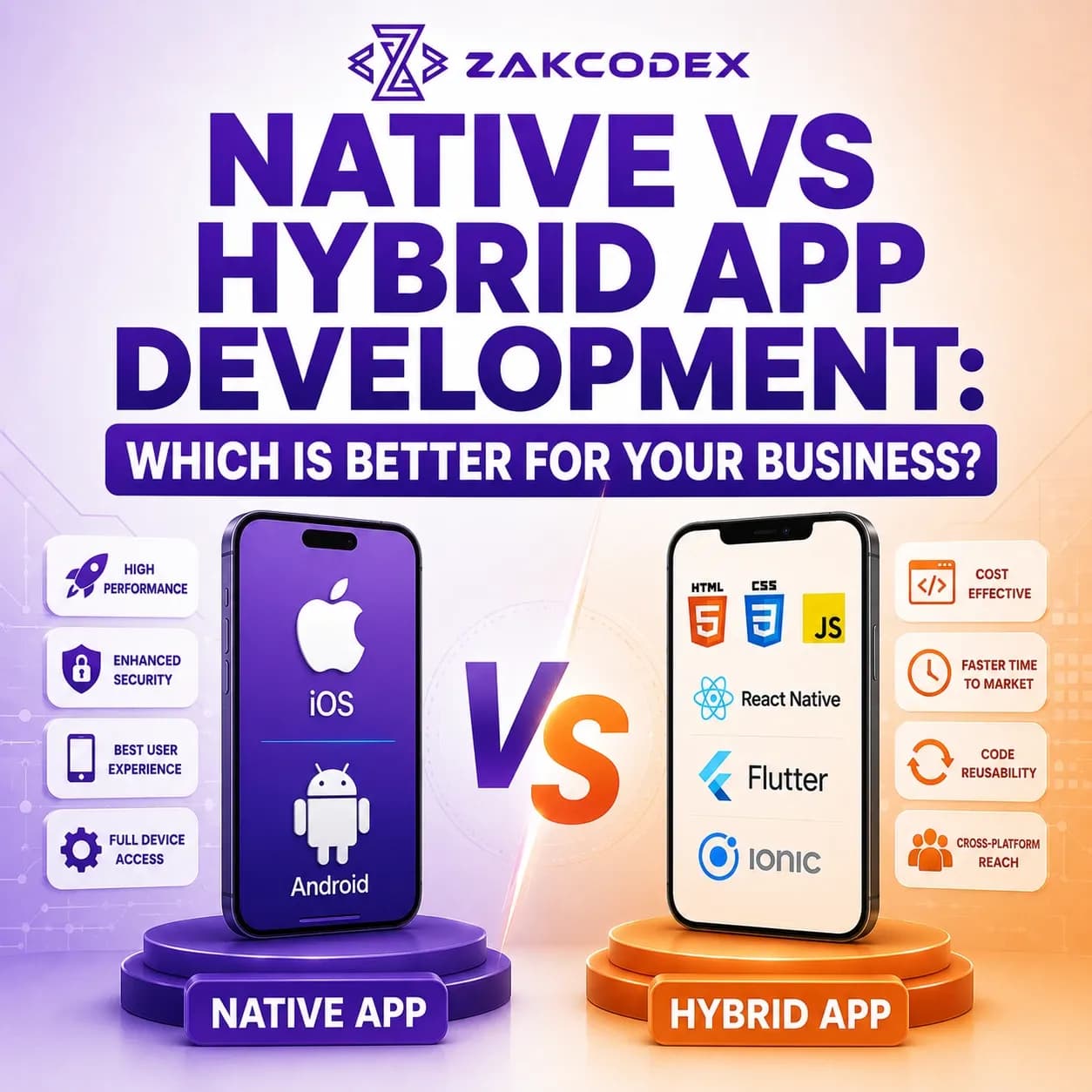
The primary difference between native and hybrid app development lies in their architectural approach and underlying code execution: native app development involves building standalone, platform-specific software using platform-native languages (Swift or SwiftUI for iOS; Kotlin or Java for Android), whereas hybrid app development creates a single, unified codebase using web technologies (HTML, CSS, JavaScript) or modern cross-platform mobile app development frameworks that run uniformly across multiple operating systems. Choosing between these approaches directly dictates your product's run-time performance, initial engineering budget, development speed, and capacity to handle deep device-level hardware integrations.
For modern business owners, founders, and CTOs, choosing the wrong software delivery paradigm can lead to expensive codebase refactoring or missed time-to-market windows. In 2026, the lines have blurred slightly with the maturity of advanced compiling frameworks, but the fundamental trade-offs between execution speed, maintenance overhead, and capital efficiency remain as critical as ever. This comprehensive guide breaks down the strategic engineering dynamics of native vs hybrid architectures to guide your mobile product strategy.
What is Native App Development?
What is native app development? It is the process of engineering a digital application tailored strictly for a single specific mobile operating system. When executing a native mobile app development strategy, developers work exclusively within the software development kits (SDKs), human interface guidelines, and official IDEs provided by Apple or Google.
A native app is compiled directly into machine code, allowing it to communicate seamlessly with the device’s hardware layers. This architecture removes any abstraction barriers, ensuring the software operates with high computing efficiency, responsive frame rates, and fluid interface animations. The primary trade-off is structural replication: targeting both major mobile ecosystems requires funding, building, and maintaining two separate codebases written by distinct platform specialists.
What is Hybrid App Development?
What is hybrid app development? This methodology involves writing a single codebase that can compile and deploy across multiple operating systems simultaneously, significantly reducing structural engineering overhead. Historically, a hybrid mobile app development pipeline focused on wrapping standard web applications into native containers (using Apache Cordova or Ionic Capacitor), essentially rendering the application inside a specialized WebView component.
Today, the broader definition of hybrid and cross platform mobile app development has expanded to encompass sophisticated framework systems that map shared code directly to native UI components at runtime. By partnering with a specialized hybrid app development company, businesses can deliver polished applications to both iOS and Android app stores using a single team of developers, making hybrid application development a highly attractive, resource-efficient option for growing brands.
Native vs Hybrid App Development Overview
To establish a foundation for comparison, we must weigh the structural trade-offs between building native code and utilizing cross-platform ecosystems. Understanding how these approaches handle device resources, developer talent pools, and user experiences helps clarify their long-term impact on your technology stack.
Native vs Hybrid Feature Comparison Matrix
| Architectural Attribute | Native Mobile App Development | Hybrid Mobile App Development |
|---|---|---|
| Programming Languages | Swift, SwiftUI, Kotlin, Java | JavaScript, TypeScript, Dart, C# |
| Code Reusability | 0% (Separate iOS and Android codebases) | 75% – 90%+ shared codebase infrastructure |
| Rendering Pipeline | Direct access to platform UI rendering engines | WebViews or bridge-mapped native components |
| Execution Speed | Maximum runtime computing efficiency | Balanced, dependent on the abstraction layer |
| Talent Requirements | Dedicated iOS and Android specialist engineers | Unified frontend cross-platform developers |
Deep-Dive Technical & Operational Comparisons
Performance Comparison
In terms of pure computing efficiency, native application development remains the gold standard. Because native code compiles directly into platform-specific machine language, it minimizes CPU and GPU performance overhead. This direct hardware access is vital for intensive data processing tasks, real-time audio/video rendering, and highly responsive graphic animations.
Conversely, a traditional hybrid mobile application relies on a wrapper layer or runtime engine to translate web instructions into mobile commands. While modern mobile processors make this performance gap imperceptible for standard data-driven business applications, hybrid options can struggle with heavy multithreading, advanced background processing, or low-latency computational requirements.
User Experience (UI/UX)
Native engineering adheres strictly to platform-specific design languages - Apple’s Human Interface Guidelines and Google’s Material Design. This ensures the native app feels natural to the user, leveraging familiar native behaviors for scrolling, gesture navigation, and system haptics. Professional mobile app design services often favor native environments when creating custom, low-level interface animations.
Hybrid applications use a shared design approach, which can make it challenging to maintain distinct, platform-specific UI behaviors across both iOS and Android. While modern design tools allow teams to customize the user interface for different platforms, replicating the exact feel of native micro-interactions across a single codebase requires careful optimization.
Development Speed & Time to Market
If speed is your primary commercial priority, cross-platform app development offers a clear advantage. Writing a single codebase means your product engineering team builds, debugs, and deploys features simultaneously. This unified workflow eliminates the need to coordinate feature releases between separate iOS and Android teams, significantly accelerating your overall time to market.
Development Cost Comparison
Are hybrid apps cheaper than native apps? In almost all commercial scenarios, yes. Investing in native development means paying for two separate development lifecycles, which increases your initial budget. By choosing hybrid app development services, you can cut upfront engineering costs by 30% to 50%, as a single team can handle both platforms concurrently.
| Strategic Dimension | Native Development Path | Hybrid / Cross-Platform Path |
|---|---|---|
| Initial Capital Cost | High (Requires funding two separate codebases) | Optimised (Single team, shared codebase) |
| Development Speed | Sequential or resource-intensive parallel builds | Rapid unified sprint cycles |
| Time to Market | Longer due to dual testing pipelines | Accelerated dual-platform deployment |
Scalability, Maintenance & Updates
Maintaining long-term software health requires regular code updates. With native apps, every new feature request or bug fix must be implemented and tested across two different codebases, which can lead to feature fragmentation over time. Hybrid frameworks simplify this process by allowing updates to be applied across a single codebase, making ongoing product maintenance much easier to manage.
Device & Native API Access
Native apps enjoy seamless access to all built-in device capabilities, including the camera array, biometric sensors, Bluetooth connectivity, ARKit/ARCore, and specialized location-tracking chips. Hybrid apps rely on plugins or bridges to communicate with these native hardware features. While common functionalities like GPS are well-supported, access to cutting-edge or niche hardware APIs can be delayed until the community builds the necessary integration bridges.
Offline Functionality
Native code excels at managing local data persistence and offline synchronization through robust database solutions like CoreData or Room. While hybrid applications can store data locally using web storage mechanisms or SQLite extensions, apps that require extensive offline computing or complex data syncing perform more reliably when built natively.
Flutter and React Native: Where Do They Fit?
A common point of confusion for businesses is understanding how frameworks like Flutter and React Native fit into the native vs hybrid debate. These systems don't rely on basic web-based wrappers; instead, they operate as highly optimized cross-platform ecosystems that compile directly to native UI components or use high-performance rendering engines.
If you choose Flutter app development, the framework uses the Dart language to draw its own UI components via the Impeller rendering engine, ensuring consistent visual layouts across platforms. If you opt for React Native app development, the system uses JavaScript to invoke native user interface components directly. For a detailed comparison of these two cross-platform environments, check out our analysis on Flutter vs React Native.
Native vs Hybrid Options by Business Type
Your business vertical, regulatory landscape, and target audience behavior should heavily influence your technical architecture decisions.
Startups & MVPs
For early-stage startups focused on finding product-market fit, capital efficiency and rapid iteration are paramount. Using hybrid mobile app development services allows you to launch a functional Minimum Viable Product (MVP) to both iOS and Android users simultaneously, gathering valuable feedback without burning through early funding rounds.
Enterprise Applications
Large enterprises often deal with complex legacy integrations, strict corporate security policies, and demanding compliance standards. Native architectures provide the robust control, deep security customizability, and raw processing stability required to manage large-scale corporate data systems effectively.
Ecommerce
Mobile commerce platforms rely on smooth product browsing, responsive search filters, and fast, secure checkout flows. Hybrid frameworks are excellent for ecommerce applications because they let you integrate existing web-based product catalogs, inventory microservices, and global payment gateways into a single mobile experience across all devices.
Healthcare & FinTech
Healthcare and FinTech applications require absolute data privacy, bank-grade end-to-end encryption, and compliance with strict regulatory frameworks like UK GDPR, HIPAA, or FCA guidelines. Native engineering gives development teams granular control over hardware encryption keys, secure biometric authentication, and isolated data storage, making it the preferred choice for high-security applications.
AI Applications
Mobile applications that leverage advanced artificial intelligence can run their processing models either in the cloud or directly on the user's device. If your AI features require on-device machine learning that taps into Apple's Neural Engine or Google's Tensor Processing Units, native development is essential to access that hardware acceleration efficiently.
Pros and Cons Analysis
Native App Development
Pros:
- Maximum computational performance and fluid frame rates.
- Immediate access to new operating system features and hardware APIs.
- Seamless integration with platform-specific design systems and haptics.
- Fewer third-party dependencies, which reduces security risks.
Cons:
- Higher initial development and ongoing maintenance costs.
- Requires managing two independent engineering teams.
- Longer overall development cycles and time to market.
Hybrid App Development
Pros:
- Single shared codebase dramatically lowers upfront costs.
- Faster time to market, allowing you to reach both platforms simultaneously.
- Easier long-term maintenance with a unified development team.
- High code reusability across mobile, web, and desktop environments.
Cons:
- Slight performance overhead during heavy processing tasks.
- Dependent on third-party plugins for advanced hardware access.
- Custom UI adjustments are often needed to ensure consistency across platforms.
Strategic Decision Matrix
To help you choose the right approach for your project, review this decision matrix based on your core business requirements:
| Primary Strategic Goal | Recommended Approach | Key Reason |
|---|---|---|
| Validate a new product concept on a tight budget | Hybrid App Development | Launches on both iOS and Android simultaneously with lower upfront costs. |
| Build a high-performance 3D graphic game or multimedia tool | Native App Development | Requires direct hardware access and maximum processing performance. |
| Deliver a content-driven retail or corporate application quickly | Hybrid App Development | Accelerates your time to market while using a single shared codebase. |
| Create a highly secure, regulated banking application | Native App Development | Provides granular control over biometric security and device-level encryption layers. |
Alternative Approaches: Native vs Web App and PWAs
When planning your mobile presence, it's also helpful to understand how mobile apps compare to modern web alternatives like Progressive Web Apps (PWAs). The choice between a native app vs web app comes down to user engagement and feature requirements. A traditional web application lives entirely inside a browser, making it easy to access but limiting its ability to leverage device hardware or re-engage users through push notifications.
When comparing a pwa vs native strategy, PWAs offer a highly responsive web experience that can be installed on a user's home screen without going through an app store. While PWAs are cost-effective and easy to update, they still lack full integration with iOS hardware APIs and don't offer the same offline reliability or brand visibility as a dedicated application in the app store. For comprehensive digital strategies, businesses often combine a web presence with a mobile build, matching the web app vs mobile app balance to different stages of the customer journey.
Final Recommendation
The choice between native and hybrid app development ultimately depends on your business's growth stage, technical requirements, and financial constraints. If your product requires complex device integrations, advanced hardware processing, or strict regulatory compliance, investing in native development provides a stable foundation for growth.
However, if you are an ambitious brand looking to optimize your budget, launch quickly, and deliver a smooth user experience across both platforms, modern hybrid and cross-platform frameworks are an excellent choice. By aligning your business goals with the right technology stack, you can maximize your development budget and build a reliable product designed for long-term commercial success.
For a complete picture of mobile project budgeting, explore our detailed pricing analysis in the mobile app development cost guide to structure your investment effectively.